What are the solutions for poor coloring in kiwifruit?
Kiwifruit is a fruit that comes on the market in autumn. It is rich in vitamin C and has a sweet and sour, delicious taste, so it is deeply loved by people. August to September is the key period for kiwifruit to accumulate sugar and develop color, but many growers report that their kiwifruit colors poorly. What should be done? Let's take a look together.
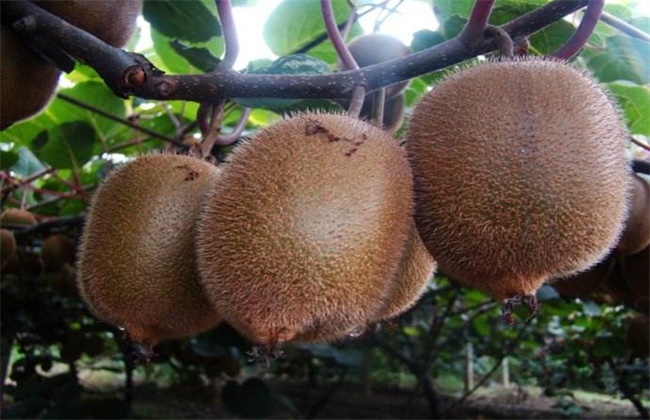
1. Strengthen autumn pruning
For orchards where summer pruning was not thorough, the leaf layer is too thick, the branches are too dense, and air and light penetration is poor, autumn pruning should be done carefully and thoroughly to increase ventilation and light penetration within the canopy. At the same time, on the premise that it will not cause sunburn to the fruit, remove old leaves and diseased leaves in time, and let as many branches on the trellis surface receive light as possible to promote fruit coloring. In addition, after pruning, be sure to apply a wound-healing and antiseptic film to the cuts to promote healing of the cuts and prevent pathogens from taking advantage of the openings.
2. Harvest at the right time
There are many varieties of kiwifruit, and each variety has its own advantages and disadvantages. There are both early-maturing varieties and late-maturing varieties, so their harvest times also differ. If the fruit is harvested too early, it will affect fruit coloring, so the harvest time must be well controlled. Generally speaking, kiwifruit needs about 120-150 days of growth time, so the harvest time is generally in October to November. For example, the harvest time for Qinmei kiwifruit is in early to mid-November.
3. Balanced fertilization
The growth period of kiwifruit is mainly divided into three stages. In the early stage, vegetative growth dominates, and fertilization at this time is mainly nitrogen fertilizer to promote the growth of branches and leaves. In the middle stage, reproductive growth has the advantage, and fertilization at this time should be mainly phosphorus and potassium fertilizer, combined with foliar fertilizer, while controlling the application of nitrogen fertilizer to inhibit vegetative growth and increase the fruit-setting rate. In the late stage, vegetative growth and reproductive growth advance side by side. At this time, spray Zhuangguodiling to enlarge the nutrient transport ducts and increase the amount of nutrient transport, promoting coloring.
4. Control moisture
Watering kiwifruit also affects fruit coloring. During the fruit expansion period, watering should be timely and appropriate, just enough to keep the soil from completely drying out, with the goal of increasing single fruit weight and raising yield. In the later stage, watering should be controlled to promote the accumulation of sugar in the fruit and prevent sunburn. In the later stage in the orchard, water less or not at all according to actual conditions, open up the light path, and help the fruit color.
The above is an introduction to solutions for poor coloring in kiwifruit. I hope it can help you. To learn more related knowledge, please stay tuned to us.