Detailed Explanation of the Key Operating Points of Kiwifruit Bagging Technology
Kiwifruit is a fruit that many people very much enjoy eating. It has a very large planting area in our country, and when growing kiwifruit, we need to do a good job in all kinds of management work. Among these, bagging is something we need to pay special attention to; kiwifruit bagging is very beneficial to its yield and fruit quality. So how should kiwifruit be bagged? Below, the editor brings you the bagging technology for kiwifruit, so let's take a look!
1. Preparation Before Bagging
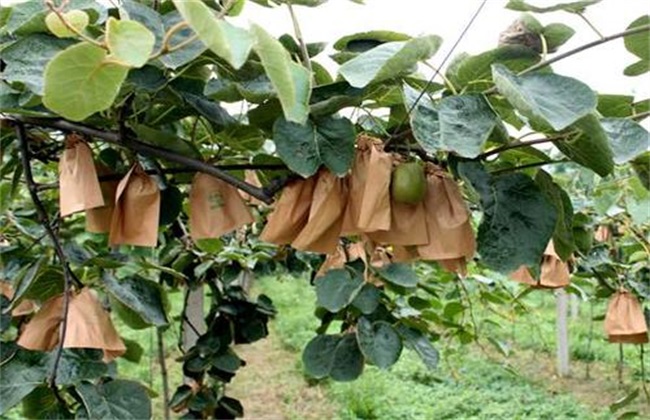
Before bagging kiwifruit, we must first thin the fruit appropriately, removing deformed fruit, fruit with pests and diseases, and some small fruit, etc. Keep the young fruit that grows well and normally. For young trees, according to the growth vigor of the fruiting mother branches, reasonably keep about three fruiting branches. If the kiwifruit tree is weak in vigor and injured, then keep fewer fruit or no fruit. After tidying up the fruit trees, we should choose the bags well; the bags should preferably be mainly wood pulp paper bags. Control the length and width of the bags according to the size of the fruit; a slit should be opened in the middle part of the upper opening, and the lower corner should be opened about 3 cm. The paper bags should have the advantages of being resistant to rain, good permeability, and good toughness.
2. Bagging Time
The time for bagging kiwifruit should be about one month after the flowers fall, and bagging should be completed within half a month. Generally, bagging should be carried out after fruit thinning half a month after the kiwifruit flowers fall. When bagging, there must be no dew on the fruit trees; it should be done after the dew and liquid medicine have dried. On sunny days, it is generally done around 10 a.m. and around 5 p.m., and bagging must not be done after rain. If bagging is too early, it is very unfavorable to the development of the young fruit, while if bagging is too late, the bagging effect is basically lost, and the fruit stalk gradually hardens, making bagging inconvenient. Also, before bagging, a whole-orchard disinfection should be carried out to sterilize and kill insects.
3. Bagging Method
Before bagging, the bags can be softened to make it easier to tie the bag opening tightly after bagging. When bagging, first use one hand to open the bag, then put the young fruit into the bag from bottom to top. Then fold the bag opening from the slit into pleats, and tie it tightly with wire or similar materials. If it is a single fruit, it can be tied directly to the fruiting branch, while if it is a cluster, it should be tied to the fruit stalk. But be careful not to damage the fruit stalk, then check whether there is an opening below the bag; if it is closed, then open it about 3 cm. The upper end should be sealed tightly, and the movements should not be too large; if it hangs vertically, it should be fixed in time to avoid being blown by strong wind.
4. Management After Bagging
If the temperature exceeds 35 degrees after bagging, open the bottom opening in time for ventilation and cooling. We should also regularly check the actual condition of the fruit and keep good records; if pests and diseases occur, take corresponding measures in time, and if the bags are damaged, replace them in time. If the temperature is too high and it is relatively dry, water in time to prevent the fruit from sunburn. Similarly, in the rainy season, do a good job in drainage. Finally, remove the bags one week before fruit harvesting to promote fruit coloring. If cloudy and rainy weather occurs, then delay the time of removing the bags to prevent the fruit from being polluted by rainwater.
The above is a brief introduction to kiwifruit bagging technology. That is all for today's introduction. This article is for reference only, and I hope it can help everyone!