The Role of Winter Irrigation for Grapes and a Detailed Explanation of Watering Methods
Grapes are a common fruit, and the grapevine itself is a relatively drought-tolerant plant, but watering must be guaranteed at three key periods each year, and the most important of these is winter irrigation. So when is the best time for winter irrigation in a vineyard, and what benefits does it bring? Let's take a look.
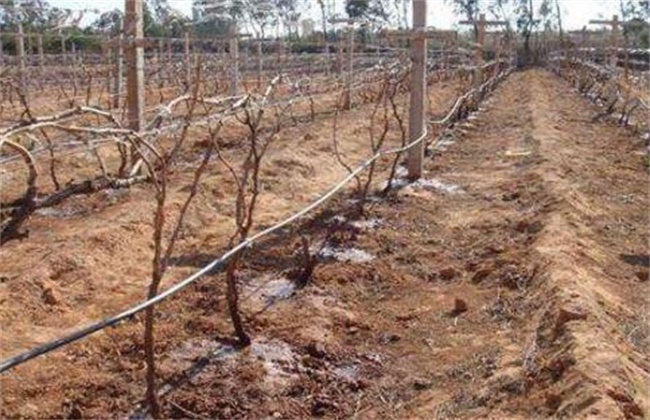
1. Timing of Winter Irrigation
Winter irrigation for grapes must not be done too early or too late. If winter irrigation is done too early, the temperature is still relatively high at that time, evaporation of water from the ground surface is high, which is not conducive to storing water and preserving soil moisture in the field, and it will reduce the cold and frost resistance of the fruit trees. But if winter irrigation is done too late, the temperature is too low, and at that time the irrigation water cannot seep down and will freeze on the surface, which also makes the root system more susceptible to frost damage. To determine the right time for winter irrigation of grapes, you should base it on the local climate: when the nighttime temperature drops below 0°C and the soil freezes, and then after the daytime temperature rises the soil can thaw again, that is the best time for winter irrigation.
2. The Role of Winter Irrigation
Winter irrigation can improve the cold resistance of the fruit trees and ensure that the grapevines overwinter safely. Winter irrigation can speed up the decomposition of organic fertilizer, help the root system absorb individual minerals, increase the tree's accumulation of nutrients, raise soil water content, and improve yield and quality. The water stored in the soil by winter irrigation can both improve frost resistance and prevent drought in winter and early spring. In winter, with strong winds and dry ground, the soil often becomes loose with poor cohesion, and winter irrigation can keep the soil in a moist state, both insulating and retaining moisture while also preventing freezing.
3. Water Volume for Winter Irrigation
The water volume for winter irrigation should be such that on the day of watering all the water seeps into the ground; generally, for young trees a penetration of 20-30 cm is suitable, while for mature trees a penetration of 70-100 cm is suitable, and 60%-80% of the soil's maximum water-holding capacity is appropriate. If it is too little, it cannot meet the needs of the tree; if it is too much, it will also wash the fertilizer away, not only causing fertilizer loss but also wasting time and effort. Generally, 2-3 hours after winter irrigation, you can dig a pit outside the tree basin and see the depth of water seepage.
4. Winter Irrigation Methods
Winter irrigation can use the method of well irrigation. Before well irrigation, dig the water channels in the tree field along the tree rows, open the gate to release water, and irrigate enough to soak through, so that the trees drink their fill, increasing root moisture and improving growth capacity. For 1-2 year old grapes, watering should be applied to the roots; for perennial trees, build an oval-shaped earth ridge around them like a large basin, so that water does not flow outward; this can save water, achieve concentrated watering, and promote strong water penetration.
The above is an introduction to the role and methods of winter irrigation for grapes. We hope it can help you. If you want to learn more related knowledge, please stay tuned to us.