Detailed Explanation of the Causes of Shoot Dieback in Pomegranate Trees and Control Measures
Pomegranate trees are fairly common, and especially in winter and early spring, the young shoots are highly susceptible to frost damage, while in spring they are highly prone to losing water and drying out and dying, which seriously affects flower bud differentiation in pomegranates and deals a severe blow to yields. So what causes shoot dieback in pomegranates? Let's take a look together.
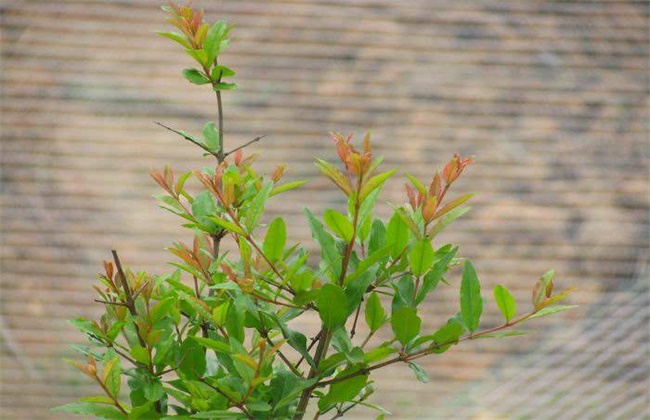
I. Causes of shoot dieback
Shoot dieback in pomegranate branches rarely occurs in winter; it generally occurs in early spring, when the branches develop longitudinal wrinkling of the bark, spreading from the upper part of the branch downward, resulting in death of the branch from top to bottom. Moreover, in early spring drought, combined with frequent dry northwesterly winds, shoot dieback is relatively severe; conversely, shoot dieback is relatively mild. The real cause of shoot dieback is frost drought. In northern regions, winters are cold, and in winter and early spring the underground soil freezes. The root system of young trees is distributed shallowly, mostly in the frozen soil layer, so the roots cannot absorb water or absorb relatively little water. In early spring, temperatures rise quickly, and with strong winds and dry air, the branches lose water rapidly, while the root system cannot absorb enough water to maintain them, causing an obvious water imbalance, so the branches suffer physiological desiccation, which causes shoot dieback.
II. Control measures
1. Variety selection
When planting, varieties with relatively strong cold resistance should be selected, such as Hongpitian No. 1, Heizitian, Qingpitian No. 1, etc. In addition, local climatic conditions should also be considered when planting. For example, when planting in the north, varieties with relatively poor cold resistance should not be planted, as this is not conducive to their overwintering.
2. Strengthen fertilizer and water management
For young trees planted for 1-2 years, phosphorus and potassium fertilizer should be applied in a timely manner during the growing period from July to September each year, while nitrogen fertilizer application should be controlled and the number of waterings appropriately reduced, so as to inhibit new shoot growth and allow the branches to become fully lignified. In this way, they can effectively resist low-temperature frost damage and dry winds.
3. Timely pinching
In mid-August, the growing points of new shoots should be promptly removed to control branch growth and promote nutrient accumulation. At the same time, young buds sprouting at the pinched points of the branches should also be promptly removed to ensure that the branch tissues mature fully and to enhance the plant's cold resistance for overwintering.
4. Chemical cold protection
In early August, spray a 300-fold solution of paclobutrazol on the leaves to control new shoot growth and promote branch fullness. After the plants shed their leaves in November, apply petroleum jelly to the new shoots of the branches, which can now improve the plant's cold resistance. In February to March of spring, spray the tree canopy with 5% lime milk, which can delay the active period of the branch cambium and reduce transpiration water loss from the branches.
5. Burying in soil for cold protection
For planted seedlings, in early November the young tree branches can be bent over and buried in soil to prevent the branches from losing water and freezing. The burial depth is about 30 cm, and the branches are released again in early March of the following spring.
The above is an introduction to the causes of shoot dieback in pomegranate trees and control measures. We hope it can help you. To learn more related knowledge, please stay tuned to us.