What to Do About Fruit Tree Twig Shriveling? Cause Analysis and Prevention Methods
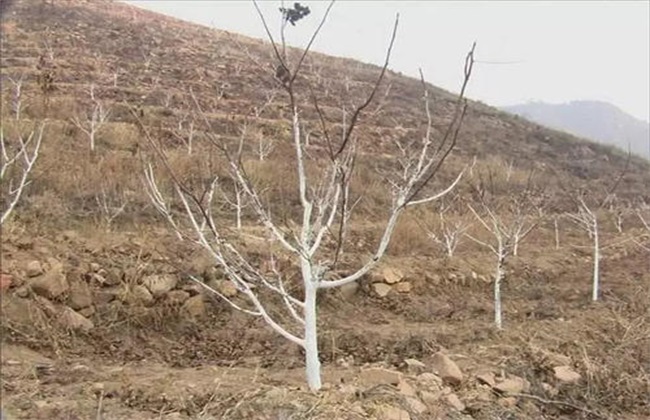
There are a great many varieties of fruit trees in China, and some of them, especially during the young tree stage. In winter and spring, because of excessive drought and lack of water, their branches are highly prone to shriveling, cracking, and various other adverse phenomena, and this is what is called fruit tree twig shriveling. Fruit tree twig shriveling has a very large impact on the growth and yield of fruit trees. So what should be done about fruit tree twig shriveling? Below, the editor will give everyone a brief introduction. Let's take a look together!
1. Burying in soil in winter
Fruit tree twig shriveling should generally be prevented first, and among these, young trees are the priority. Therefore in winter, for one-year-old young trees, before the soil has frozen, we should bend them over. Then cover them well with wet soil, so that in the moist soil, the evaporation rate of water from the branches is very slow. This not only allows them to overwinter safely, but also avoids twig shriveling caused by winter drought and spring drought. When the soil is relatively dry, watering should be done well, and after the water content is suitable, cover with wet soil, and then after the following spring, remove the covering soil.
2. Wrapping with plastic strips
If the young trees are relatively large, then burying in soil is not suitable. At this time we should pay attention to pruning in advance, and immediately after pruning, wrap with plastic strips. The plastic strips do not need to be of very good quality; use commonly available plastic film. But be sure to wrap them tightly to prevent them from being blown off by wind. First wrap the upper end tightly, then go from top to bottom round after round, until the entire branch is wrapped. Usually every branch of a young tree should be wrapped well, and for young trees that have been transplanted for about one year, mainly vigorous, strongly growing branches should be the focus. This is mainly to ensure that the tree crown can form well, and strongly growing branches are inherently prone to twig shriveling, so they need focused protection.
3. Covering with plastic film
Covering with plastic film can improve the soil's water retention and can also maintain soil temperature. In southern regions, soil covered with plastic film in winter basically does not freeze. Moreover, in early spring, if there is sufficient sunlight, the temperature can reach about 10 degrees. This is also the time when water evaporation from the aboveground branches is high, and at this time the root system also gradually begins to act, and can replenish water consumption in time, thereby achieving the purpose of preventing twig shriveling. Generally, after finishing irrigation with overwintering water in autumn and winter, plastic film should be laid on both sides of the young trees; if the plant spacing is not large, the plastic film should not be cut apart, and should be pressed down with soil.
4. Proper hilling
If the fruit trees are relatively large, then wrapping with plastic strips will also be more troublesome, but in order to ensure that the fruit trees can overwinter safely. In addition to watering sufficient freezing water in autumn and then covering with film. We should also build a mound of soil on the north side at a position about 30cm from the fruit tree to block the wind. Let the roots be in a leeward environment with sufficient light, thereby increasing soil temperature, ensuring root growth and water absorption, and preventing twig shriveling. If a soil mound is buried around the trunk, then it should be removed in time in spring, because this method can only be used for winter cold protection and cannot prevent twig shriveling.
The above is a brief introduction to what to do about fruit tree twig shriveling. That is all for today's introduction. This article is for reference only, and I hope it can help everyone!