What are the seedling raising time and methods for apricot trees?
The apricot tree is one of the excellent economic forest tree species. Its fruit can be eaten directly and can also be made into jam, canned food, dried apricots, and so on. Moreover, its planting method is relatively simple and its yield is high, making it a type that many people like to grow. So how are apricot trees raised from seedlings? Follow the editor and take a look.
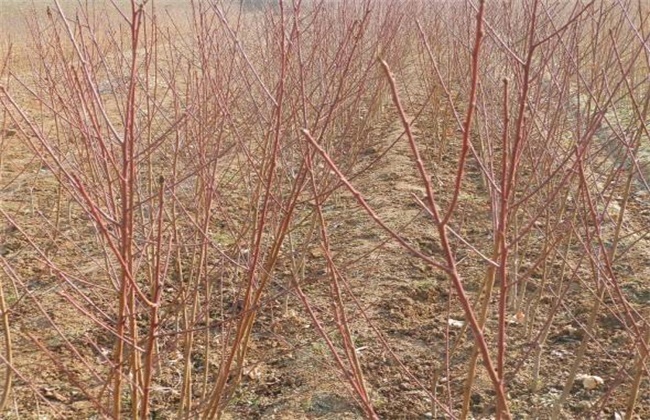
1. Rootstock propagation
The rootstock used for apricot tree seedling propagation can be a common rootstock or a different rootstock, mostly using wild apricot (Prunus sibirica). The seeds must be fully mature. Sowing can be divided into autumn sowing or spring sowing. Autumn sowing is carried out before the soil freezes. It is necessary to apply sufficient base fertilizer, then finely prepare the land, then soak the seeds in warm water overnight, and sow in furrows. For spring sowing, because the temperature is relatively low, in order to speed up emergence, the seeds first need to undergo sand storage and seed soaking treatment before sowing. If the sowing quantity is too small, before spring sowing you can manually crack the shells, then soak them in warm water to promote germination, and then sow. Before sowing, irrigate the nursery once, wait until the water has infiltrated, then apply sufficient base fertilizer, prepare the land, open furrows, and sow in rows.
2. Grafting
The grafting methods for apricot trees are divided into dormant bud grafting and branch grafting, and can be carried out from June to September. When the seedlings grow to 60-70 cm and the thickness is about 1 cm, grafting can be carried out. Generally, the cut grafting method is used in spring, while the bud grafting method is used in summer. The cut grafting method uses plant branches as scions for grafting. From excellent and pure, robustly growing, high-yielding and stable-yielding plants free of pests and diseases, select branches with plump buds and fully lignified as scions. Cut them into 5 cm lengths so that the lower part of the scion forms a flat wedge shape. Cut off the rootstock at a place 4 cm above the ground. Choose one side and cut down vertically from within the bark layer of the cut surface, slightly carrying wood, to a depth similar to the long slanted surface of the scion. Then insert the large cut surface of the scion inward into the rootstock cut so that they fit tightly together, then bind them.
3. Management after grafting
Check and remove the plastic strips in time. Generally, check the survival of the graft 10-15 days after grafting. If it has not survived, supplement grafting in time. After the graft survives, cut off the leaves above the grafted bud and remove the side buds. The secondary branches below the grafted bud should be cut off. After grafting, the management measures for soil, fertilizer, water, and pest and disease control are the same as those during the seedling raising period.
4. Seedling release from the nursery
Apricot tree grafted seedlings can be released from the nursery when the main roots reach more than 3, the seedling height reaches 70 cm, the thickness at 10 cm above the graft union is about 0.7 cm, and each main branch has more than 5 strong buds. Water thoroughly 3-4 days before lifting the seedlings. When lifting the seedlings, damage the roots as little as possible and strictly prevent bruising. During transportation, wrap them well with straw bags, nylon bags, and so on. For long-distance transportation, dip the roots in mud slurry, and during transportation, water should also be sprinkled to prevent water loss from affecting the survival of the seedlings.
The above is an introduction to the seedling raising time and methods for apricot trees. I hope it can help you. To learn more related knowledge, please follow us.