How to determine the winter pruning time for kiwifruit
Kiwifruit cultivation is very common in our country, and now with the gradual drop in temperature, winter has arrived. And once winter comes, the winter pruning work for kiwifruit is very important. Whether winter pruning is successful or not will gradually affect the yield of kiwifruit the following year, so everyone needs to pay special attention to it. So how should the winter pruning time for kiwifruit be determined? Below, the editor will give you a brief introduction. Let's take a look together!
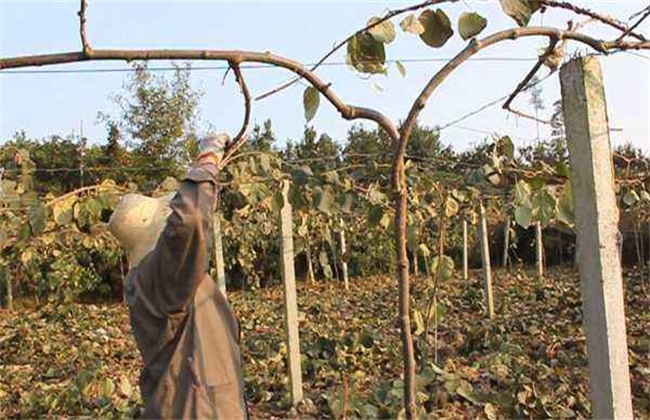
1. Winter pruning time
When pruning kiwifruit in winter, the first thing we need to pay attention to is the timing. It should begin about half a month after the kiwifruit trees shed their leaves, usually starting in mid-December and continuing until just before the Beginning of Spring the following year. Among these, it is best to do it around the three weeks before and after the Winter Solstice. Timing is very important and it should not be too early or too late. If pruning is done too early, the nutrients in the branches have not yet all flowed back to the roots, resulting in excessive waste of nutrients. If pruning is done too late, when the branches sprout the following year, a serious bleeding phenomenon will occur, hindering the tree's ability to send out shoots and sprout.
2. Pruning targets
When doing winter pruning, we should reasonably adjust the pruning method according to the variety, tree age, tree vigor, as well as the planting environment and planting techniques, and must not prune blindly. The main target should still be the fruiting canes of the kiwifruit tree, removing all thin and weak branches, diseased and pest-infested branches, and overlapping and crossing branches. As for some excessively vigorous vegetative branches with no useful value, do not be reluctant to part with them either; they should be cut off in time. After pruning, apply an appropriate amount of antiseptic film to the wounds on the kiwifruit branches to increase the healing speed of the wounds and avoid bacterial infection.
3. Pruning positions
When pruning, we should control the pruning length according to the growth vigor of the branches. If the growth vigor is strong, then about 10 buds can be retained; otherwise, the number of buds retained on the branches should be reduced. If it is a multi-main-vine trellis form, then appropriately fewer branches should be retained during winter pruning. As for the retention of fruiting canes, when there is sufficient space, moderately vigorous branches should be appropriately retained to fill gaps, and full buds should be retained at the cut. When pruning excessively vigorous branches, about 3 buds should be retained for short cutting, and if new branches emerge, they can be cultivated into long-vine main framework branches.
4. Role of winter pruning
Winter pruning of kiwifruit trees is mainly to allow the kiwifruit tree to form a framework according to the ideal shape. The branches and vines at all levels on the kiwifruit tree are reasonably distributed on the trellis. The growth contradiction between vegetative branches and fruiting branches is regulated. And the number and proportion of retained fruiting branches and vegetative branches are well controlled. Branches with no useful value, such as old, weak, dead branches and diseased branches, are cut off to improve the fruiting lifespan and fruiting efficiency of the kiwifruit tree.
The above is a brief introduction on how to determine the winter pruning time for kiwifruit. That is all for today's introduction. This article is for reference only, and I hope it can help everyone!