What are the control methods for cherry gummosis?
Gummosis is an important disease of cherry, mostly occurring in spring. This disease gives growers a serious headache: in mild cases it weakens the tree vigor, and in severe cases it causes the branches to gradually wither and die, resulting in enormous losses. So how should this disease be controlled? Let's take a look together.
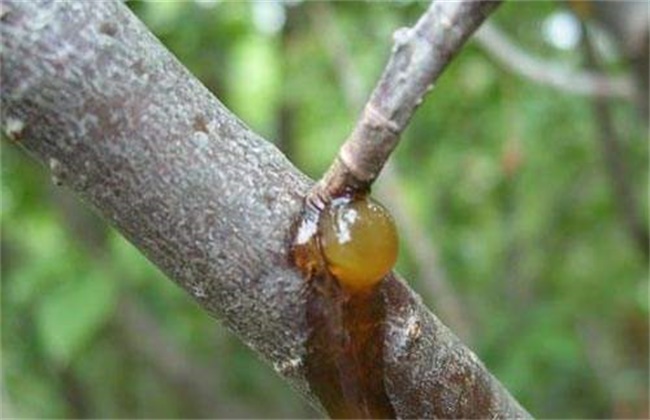
I. Symptoms
Gummosis mainly occurs on the trunk and main branches of cherry, with the trunk being the most prominently affected. In the early stage of the disease, the affected part swells and continuously exudes a semi-transparent yellow gum, and the gumming is especially severe after rain. After contacting the air, the exuded gum turns reddish-brown, and sometimes several gum beads join together to form round, irregular gummosis spots of varying sizes, which are jelly-like and form hard gum blocks after drying. After the affected part is infected, the epidermis and xylem turn brown and rot, weakening the tree vigor, and in severe cases causing the branches or the whole plant to wither and die.
II. Causes
There are many causes of cherry gummosis. For example, incompatibility between rootstock and scion makes the wound difficult to heal after grafting, resulting in gumming. Trees with weaker vigor are also highly prone to gumming: trees with poor vigor have poor nutrient circulation, resulting in insufficient nutrient distribution, and part of the nutrients reaching unsuitable positions, turning into lateral outflow and causing gumming. A heavy fruit load on the tree, relatively high nutrient consumption, or excessive pruning, unreasonable pruning cuts and other reasons can also cause gumming. When the root system is infected by disease, gumming also occurs; when the plant is infected by bacterial diseases, gumming is produced as the necrotic spots expand and deepen.
III. Control methods
Controlling gummosis requires work on multiple fronts. First, strengthen fertilizer, water and soil management: pay attention to increasing the application of organic fertilizer, appropriately increase phosphorus and potassium fertilizer, control nitrogen fertilizer application in the middle and late stages, and enhance tree vigor. In the rainy season, do a good job of drainage to reduce humidity. During the period of vigorous leaf growth, plant nutrients can be used to promote growth, increase chlorophyll and enhance the plant's nutrient capacity. Pruning should be reasonable, regulating the contradiction between vegetative growth and reproductive growth, ensuring tree vigor and temperature, and pruning cuts should be promptly coated with fungicides to promote wound healing and reduce bacterial infection. After cherry harvest, the orchard should be cleaned promptly. After fruit set, the plant's consumption is relatively high, so nutrients need to be supplemented in time to restore tree vigor, ensuring sufficient nutrient return before leaf fall and reducing gumming.
The above is an introduction to the control methods for cherry gummosis. We hope it helps you. To learn more related knowledge, please stay tuned to us.