Detailed Explanation of Key Techniques for Winter Management of Walnut Trees
Walnut trees have very poor cold tolerance. If the temperature is relatively low, the walnut trees will drop their leaves. This has a great impact on the production of walnut trees the following year. If the walnut trees suffer severe freezing damage, it may very likely lead to death. So how should they be managed during the low-temperature winter season to ensure they safely overwinter? Below, the editor brings you winter management techniques for walnut trees. Let's take a look!
1. Reasonable fertilization
In winter, we first need to do a good job of fertilizing the walnut trees, and fertilization of walnut trees should be mainly based on organic fertilizer. When deeply plowing the orchard, apply it as base fertilizer. When applying base fertilizer, we should control the amount of fertilizer according to soil fertility, walnut growth and yield, and the nutritional status of the tree. Under normal circumstances, for every 1 kg of output, about 5 kg of organic fertilizer is needed, and an appropriate amount of phosphorus and potassium fertilizer should also be added. After fertilizing, be careful to fully mix the fertilizer with the soil to improve fertilizer efficiency.
2. Timely pruning
The period from after the autumn fruit harvest of walnut trees until the leaves turn yellow and fall is one of the best times for pruning. Pruning at this time is mainly to adjust the framework structure of the walnut tree, focusing on large branches, overly long and dense branches, and diseased and pest-infested branches. It is best not to prune within one month after leaf fall or before the walnut tree buds, because these two periods are the bleeding period of walnut trees and will affect the healing of pruning wounds.
3. Heat preservation and freeze prevention
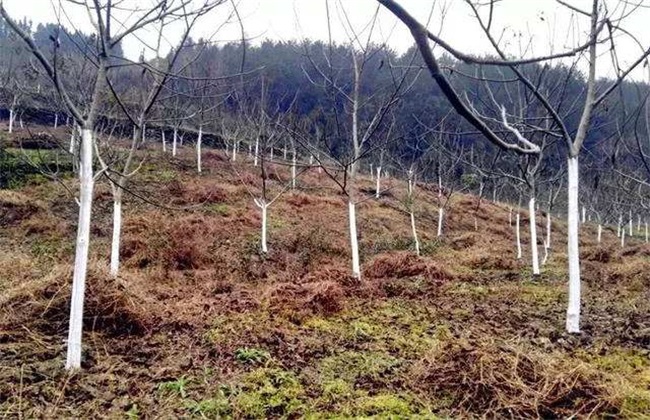
As just mentioned, walnut trees have very poor cold tolerance, so heat preservation and freeze prevention work is very important. Generally, the commonly used freeze prevention methods are basically all suitable for walnut trees. Before the soil freezes, be careful to water thoroughly with freezing water to ensure the walnut trees safely overwinter. Then whitewashing the trunks and wrapping the trees can all be used. In addition, before the winter cold wave arrives, we can also use smoke to raise the temperature and reduce freezing damage to walnut trees.
4. Appropriate watering
Walnuts have a relatively large demand for water and strong waterlogging tolerance, and are not suitable for growing in dry environments. Therefore, in winter we should also water appropriately to ensure the production capacity of walnut trees the following year. After applying base fertilizer, water once to improve the absorption rate of the base fertilizer and speed up the decomposition of the fertilizer. Then we should also water well for overwintering, especially during winter drought, we must do a good job of watering. However, be careful to control the water temperature and not let it be too low, to avoid causing freezing damage to walnut trees.
The above is a brief introduction to winter management techniques for walnut trees. In addition, we should also do a good job in the prevention and control of diseases and pests to avoid affecting the normal growth of walnut trees in the following spring. That is all for today's introduction. This article is for reference only. Thank you for reading and supporting.