What is the purpose of whitewashing fruit trees? Explained clearly in one article
As temperatures get lower and lower now, we have gradually entered winter. Winter temperatures are very low, so many fruit trees also enter a dormant period to avoid consuming too many nutrients to survive the winter. And many fruit growers also choose to whitewash their fruit trees, saying it helps the fruit trees survive the winter. So what exactly is the purpose of whitewashing fruit trees? Today the editor will give you a brief introduction, so let's take a look below!
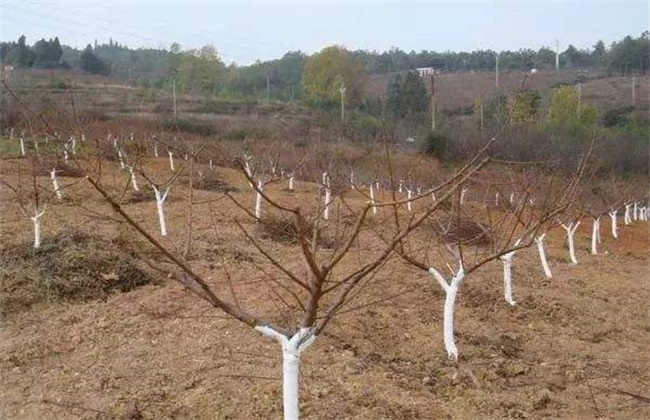
1. Sterilizing and killing pests
Whitewash for fruit trees generally contains substances such as quicklime and salt, and these two substances have a strong sterilizing and disinfecting effect. So if fruit trees are whitewashed in winter, it can eliminate the overwintering pathogens in all parts of the fruit tree trunk, and it can also speed up the healing of fruit tree wounds. In addition, many pest eggs also like to overwinter in positions such as the cracks and peeling bark of fruit trees, and then come out to be active in the spring of the following year, and proper whitewashing can also eliminate these eggs in time.
2. Preventing pests and livestock
Whitewashing the fruit tree canopy not only has the effect of eliminating pests, but can also prevent fruit trees from being harmed by pests. Because pests that are harmful to fruit trees generally like to be active in dark and dirty places. They generally dislike or are afraid of white, so after fruit trees are whitewashed, pests do not dare to climb along the trunk onto the fruit trees to harm them. And after whitewashing, it can also achieve the purpose of preventing harm from livestock. Many livestock are also relatively sensitive to white, and after whitewashing, livestock basically will not come close, so it can also prevent the bark from being bitten and damaged by livestock.
3. Preventing freezing damage
Preventing freezing damage is actually one of the main purposes of whitewashing the trunk. Because after entering winter, until the spring of the following year, the temperature difference between day and night is very large. If it is not handled in time, then it is very unfavorable to the growth of fruit trees. Therefore, through whitewashing, fruit trees can reflect sunlight during the day, reducing the day-night temperature difference of the trunk and so on, thereby reducing the incidence of freezing damage. And after fruit trees are whitewashed, the temperature accumulation at the base of the trunk is not fast, which can delay the budding time and flowering period of fruit trees, and can effectively reduce the phenomenon of the trunk being damaged by sunscald, ensuring the trunk safely overwinters normally.
4. Precautions for whitewashing
When using whitewash, pay attention to mixing and using it immediately; whitewash cannot be stored for too long. When using it, stir the whitewash thoroughly to ensure that the whitewash can be applied evenly on the trunk. Before whitewashing, pay attention to cleaning off the pests on the trunk, and it should be done on a sunny day. In addition, there are many varieties of whitewash, and the common ones include copper sulfate lime whitewash, mainly made from copper sulfate, quicklime and water. Then there is lime sulfur whitewash, mainly made from substances such as quicklime, sulfur, salt, and animal and vegetable oil hot water.
The above is a brief introduction to the purpose of whitewashing fruit trees. That is all for today's introduction. This article is for reference only. Friends who want to learn more related information, please continue to follow us!