How to Lay Reflective Film in an Apple Orchard for the Best Results
Apples are grown on a fairly large area in China, and once the apple trees reach the late stage of maturity, we should lay reflective film in the orchard. Laying reflective film can effectively improve the coloring of the apple fruit and increase the number of fully red apples. Combined with management tasks such as flower and fruit thinning and turning the fruit, it is of great help to the yield. So how should the reflective film be laid in an apple orchard? Below, the editor gives a brief introduction for everyone. Let's take a look!
1. Choosing the reflective film
There are now a great many reflective films to choose from on the market, and their quality varies, so you must pay close attention when choosing a reflective film. Focus on reflective performance, moisture resistance and oxidation resistance. The material is generally polypropylene or polyester aluminum foil, and a double-sided composite film is preferable. The reflectivity of this kind of reflective film can generally reach about 65%, and its service life can reach 4 years, which can reduce the investment in reflective film. There is also a single-layer aluminized film. Although it is relatively cheap, its quality is very poor, and its service life will not exceed 4 years at most, so this kind of reflective film is generally not recommended.
2. Choosing the orchard
When laying reflective film, the orchard must have good light penetration, and it should not be laid in a densely shaded orchard. If the orchard is densely shaded and has poor light penetration, the effect of the reflective film will be greatly reduced. Also, if there is no high level of management, the planting returns are not ideal, and the production is mainly aimed at the low-end market, then laying reflective film is also not recommended. This is because laying reflective film requires the orchard to have a relatively high level of management, mainly orchards whose production goal is high-quality fruit. The planting returns are high and the payback is quick, and the laying effect of the reflective film can also be fully brought into play.
3. Preparation before laying the film
Before laying the film in the apple orchard, we must first do the preparatory work well. In the orchard, weeds, fallen fruit and so on should be promptly cleared from the soil, and then the land should be leveled according to the row direction of the apple trees, keeping it higher on the inside and lower on the outside, with the height controlled at about 8 liang cm. This prevents water from accumulating on the reflective film and affecting its reflective efficiency. Then the vigorous shoots, overly dense branches and overlapping or crossing branches on the apple trees should be pruned off to improve the light penetration of the trees. If the branches have useful value, then they should be properly bent. Finally, for drooping branches, methods such as heading back and renewal pruning should be used to keep the distance between the branches and the ground.
4. Laying the film at the right time
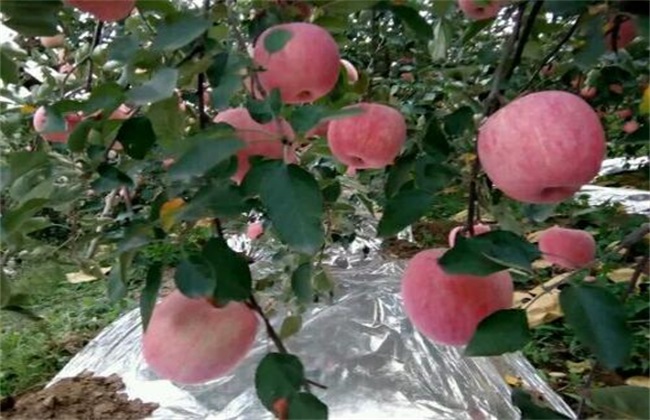
The reflective film should generally be laid about 4 days after the bags are removed. If the fruit was not bagged, then the film should be laid about one month before picking. For densely planted apple orchards, the film should mainly be laid between the rows; on the contrary, if the trees are planted as standard trees, it should be laid within the shadow of the canopy. Whatever laying method is used, when laying, it should be laid along the direction of the apple tree rows. Place the reflective film at one end of the row, generally laying it while backing up, and then fix the reflective film with stones. The reflective film should not be too tight, to prevent a sudden drop in temperature from tearing it. Then the debris on the reflective film should be cleaned off regularly to ensure its reflective efficiency.
The above is a brief introduction to how to lay reflective film in an apple orchard. That is all for today's introduction. This article is for reference only, and I hope it can help everyone!