Reasons for Low Yield of Off-Season Mangoes and Solutions
Mango is a summer fruit, but improving off-season cultivation techniques can bring it to market in early spring, when its excellent quality commands a high price. However, there are some technical problems in off-season cultivation that lead to low yields. What causes this? How can it be solved? Let's take a look together.
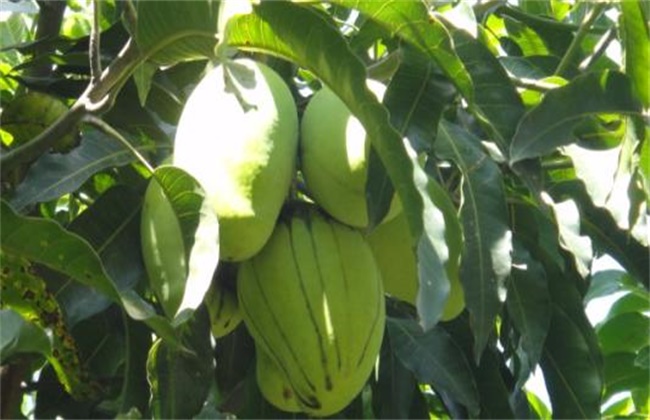
I. Causes of Low Yield in Off-Season Mangoes
1. Poor Climate
Mango flowering and fruiting occur in the low-temperature, dry winter and spring, and yield is greatly affected by poor climate. First, low temperature and continuous rain: although low temperature can promote mango flower bud differentiation, encountering low-temperature and rainy weather after flowering can cause flower drop, poor pollination, and a low fruit-setting rate. Second, prolonged continuous high temperature: mango needs a certain amount of low temperature to favor flower bud differentiation, and if high temperature persists for a long time, the plant will struggle to produce flower panicles.
2. Physiological Metabolic Disorder
Many orchards use paclobutrazol to force flowering, but due to inadequate cultivation techniques and long-term excessive application, the fruit trees suffer physiological metabolic disorders, resulting in undesirable conditions such as overly long flower panicles and an unreasonable ratio of bisexual flower formation, which leads to a very low fruit-setting rate and heavy physiological fruit drop.
3. Lack of Fertilizer and Water
Some orchards apply little fertilizer, the soil has few nutrients, and the fruit trees are malnourished, which affects the final yield. This is especially true for forcing mango flowering, because the vegetative growth period is short and nutrient accumulation is low, which has a great impact on yield.
II. Measures to Increase the Yield of Off-Season Mangoes
1. Regulating the Flowering Period
Based on an analysis of the climate requirements for mango flowering and pollination as well as market demand, the mango flowering period should be scheduled for mid-to-late November. If flowering occurs from December to February, attention should be paid to the local climate. When poor climate is encountered, 0% ethephon can be sprayed on the leaves to delay the flowering period by 20-30 days.
2. Staggering the Flowering Period
If poor climate is encountered, it will not cause complete failure. The same variety in the same orchard can be treated with paclobutrazol in two or more stages, with each stage about 10 days apart. However, when spraying paclobutrazol, pay attention to the concentration and spray volume. Generally, 100 g of the chemical is added to 15 kg of water and sprayed evenly on both the front and back of the leaves, until the liquid is about to drip but has not yet dripped.
3. Forcing Flowering
After the second flush of shoots has stabilized, if there is excessive rain or the weather is relatively hot, new shoots may still emerge. You can add 8-10 ml of ethephon plus 50 g of paclobutrazol to every 15 kg of water and spray it on both the front and back of the leaves, until the liquid is about to drip but has not yet dripped.
4. Increasing Fertilizer Application
This is an important measure for increasing the yield of off-season mango cultivation. Fruit trees should be given whatever nutrients they lack. Applying fertilizer too many times will also increase costs. If funds are limited, fertilizer should be applied at least twice a year, namely the post-harvest fertilizer and the fertilizer for forcing flowering and strengthening flowers.
The above is an introduction to the causes of low yield in off-season mangoes and the solutions. We hope it can help you. To learn more related knowledge, please stay tuned to us.