How to manage pear trees during dormancy? Key technical points explained in detail
Pears are a fruit that many people enjoy eating, and pear trees are planted across a very large area in China. Throughout the year, pear trees generally go through a dormant period and a growth period. In winter, pear trees typically begin to go dormant, halting most of the tree's physiological activity. So how should you manage pear trees once they enter dormancy? Below, the editor gives a brief introduction for everyone, let's take a look!
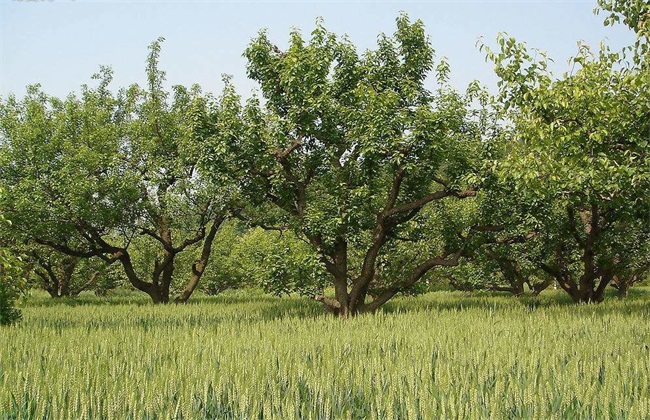
1. Winter pruning and shaping
After pear trees enter dormancy in winter, this is the most suitable time for winter pruning and shaping. The main purpose of shaping is to cultivate a high-quality, high-yielding tree structure. Therefore, when pear trees are dormant, most of the tree's nutrients are in the branches and roots, so cutting off some useless branches at this time can effectively save nutrients. It is also very beneficial to the tree's growth the following year. Winter pruning is mainly to adjust branches and buds, renew fruiting branch groups, and at the same time adjust the growth angle and direction of the main branches, and control the growth volume and flower bud volume of the pear tree.
2. Scraping off bark
During the dormant period of pear trees, in addition to doing a good job of pruning, we should also pay attention to promptly scraping off the old bark on the trunk. For the thick, old, and peeling bark on some main trunks and main branches, we must not be soft-handed. This is because this bark basically harbors many insect eggs and pathogens, and is their main overwintering site. When the environment is suitable the following year, they will begin to become active and affect the growth of the pear tree. If the pear tree has disease spots such as rot disease and ring rot disease, they should also all be scraped off, and then the scraped disease spots should be gathered and taken out of the orchard for burning.
3. Orchard cleaning work
When carrying out winter pruning, we should pay attention to removing some old, weak, diseased, and disabled branches as well as some diseased and mummified fruits. Then sweep up the fallen leaves, fallen branches, and fallen fruits in the orchard, and then spray the trees comprehensively once with an eradication agent. After cleaning up the fallen branches, leaves, and fruits, they should be sorted and handled properly. If they are fallen leaves, then we can use them as raw material for compost. As for residual branches and fallen fruits, they should be burned or deeply buried. Orchard cleaning work is a key measure for eliminating pests and pathogens, and is also the key to ensuring the normal growth of pear trees the following year.
4. Thinning flower buds
The flower buds of pear trees are very susceptible to pests and human and animal damage, so during winter pruning, for some trees in an "on" year, flower thinning work should be carried out ahead of time. If there are too many flowering branches, then according to the branch-to-fruit ratio, the tops should be broken or cut back to reduce the number of flower buds. If it is a tree in an "off" year, then the main approach should be to keep all flowers that appear, reducing the tree's nutrient consumption. For vegetative branches, short pruning should be carried out to avoid too many flower buds the following year. And if there are few flowers or no flowers, then some high-quality leaf buds should be retained to improve the quality of new shoots, enhance the tree's photosynthetic capacity, and promote the rapid recovery of tree vigor.
The above is a brief introduction to how to manage pear trees during dormancy. That is all for today's introduction. This article is for reference only, and we hope it can help everyone!