What to Do When Young Fruit Trees Suffer Winter Dehydration? Cause Analysis and Preventive Measures
In winter, when temperatures are cold, most young fruit trees begin with the current-year branches of the canopy and gradually lose water and dry up. This phenomenon is called winter dehydration. It causes the canopy to become incomplete, the tree shape to become disordered, and fruiting to be delayed. In severe cases, the aboveground parts all die. So what causes winter dehydration in young fruit trees? How can it be prevented? Let's take a look.
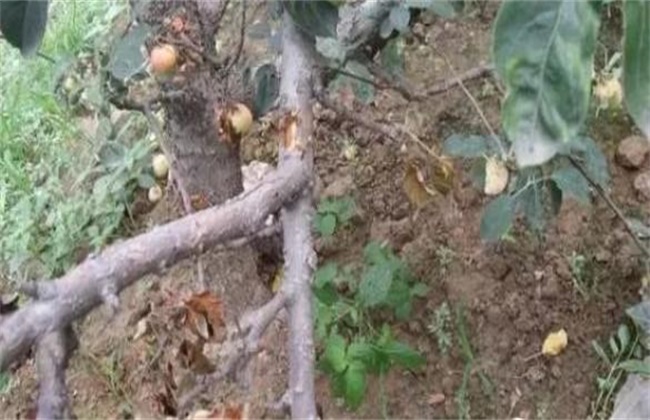
I. Causes of Winter Dehydration
Because young fruit trees grow vigorously and stop growing relatively late, the water content in their cell tissues is high. After being hit by cold winds in winter, their branch tips are dried out. When fruit tree branches are damaged by the green leafhopper in autumn, the cortical tissue of the branches is destroyed, their water retention performance is reduced, and winter dehydration is caused in spring. Around the time fruit trees bud in spring, the wind is strong and the temperature is high, the aboveground tissues of young trees lose a large amount of water through evaporation, but the soil temperature is relatively low, the activity of the root system is poor, and the water absorbed cannot meet the needs of the branches, which also produces the winter dehydration phenomenon.
II. Preventive Measures
1. Enhance the water-holding and water-retention capacity of branches
During management in the growing season, ways should be found to enhance the absorption capacity of the root system. This is the foundation and prerequisite for preventing winter dehydration in young trees.
2. Spray potassium fertilizer
In autumn, a potassium phosphate or potassium dihydrogen phosphate solution can be sprayed once every 15-20 days, for a total of 3 sprays. This can enhance the photosynthetic intensity of leaves, promote the cessation of branch growth, increase the bound water content of branches, and enhance the water-holding capacity of branches.
3. Pinching
During the vigorous growth period in autumn, a 15% paclobutrazol solution diluted 300-1000 times can be sprayed. This can effectively inhibit new shoot growth, increase the content of starch, total nitrogen, soluble sugar and soluble nitrogen in branches, and promote an increase in the bound water content of branches.
4. Prevent and control diseases and insect pests
Throughout the entire growing period, the reproduction of pests and diseases should be controlled, and leaves should be protected, especially the leaves in the later stage. This is of great significance for branch maturation and nutrient accumulation.
5. Increase water supply
Winter irrigation can be carried out at the appropriate time. This is one of the important measures for preventing winter dehydration in young fruit trees. After the ground freezes in the following year, early spring is relatively dry and soil evaporation is high. Irrigation at this time can also alleviate winter dehydration. Generally, irrigation is carried out when the soil thaws. This can both promote the soil to thaw as quickly as possible and replenish soil moisture.
6. Reduce transpiration water loss from branches and trunks
After many years of experiments and production observations, reducing transpiration water loss from branches and trunks is the most effective measure for preventing winter dehydration. In the past, the method of laying the tree down and covering it with soil was often used, and the effect was very good, but it was time-consuming and labor-intensive, and very likely to break and damage the branches and trunks. Now, wrapping branches and trunks with plastic film and applying anti-transpiration protective agents are mostly used.
The above is an introduction to the causes of winter dehydration in young fruit trees and preventive measures. We hope it can help you. If you want to learn more related knowledge, please follow us.