Detailed Explanation of Key Points of Winter Fruit Tree Fertilization Techniques
There are a great many fruit varieties suitable for planting in our country, and no matter what kind of fruit tree is planted, fertilization work is very important during planting. When fertilizing fruit trees, we must adjust the fertilization method according to the changes of the seasons. Especially in winter, there are still many points that require our attention when fertilizing fruit trees. So today, the editor brings you the winter fruit tree fertilization techniques. Let's take a look together!
1. Fertilizer Selection
Before winter fertilization, we must first select the fertilizer well. The fertilizers used in winter fertilization are generally mainly various composts, green manures and farmyard manures. These fertilizers are all organic fertilizers, and organic fertilizers are very rich in nutrients. Moreover, if used continuously, they can also improve the soil of the orchard. The application amount should be determined according to the variety of fruit trees planted. Under normal circumstances, the application amount for adult fruit trees is about 25kg per tree. Among this, it should be noted that the organic fertilizer must be in a fully decomposed state. If it is not fully decomposed, it will cause fertilizer damage to the fruit trees.
2. Fertilization Time
When fertilizing in winter, the fertilization time is very important. Because the growth habits of each fruit tree are somewhat different, the growth patterns of fruit trees in winter will also differ. We also need to determine the fertilization time according to the growth patterns of the fruit tree roots. Usually, if the base fertilizer is applied in autumn, then it should be done in September. Apart from that, it is done in October to November. If the base fertilizer has not been applied at either of these two time points, then when the soil gradually thaws in the following spring, it should be applied in time.
3. Fertilization Method
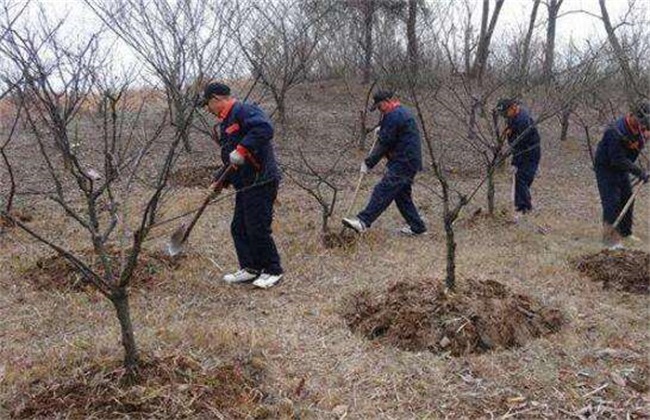
The fertilization method in winter is generally mainly trench application. Trenches should be dug on the ground around the tree canopy of the fruit tree for application. The position of the trench should be kept at about 80cm from the central trunk of the tree, and then about 5 radial trenches should be dug outward. A suitable number of strip trenches can also be dug at the outer edge of the fruit tree canopy, with a depth kept at about 30 cm and a width of about 40cm. When digging trenches, care must be taken not to damage the fruit tree roots. If thick roots are encountered, they must absolutely not be cut off. After fertilization, the fertilizer should be fully mixed with the soil, and then covered with soil and watered.
4. Supplementary Application of Micronutrient Fertilizers
Under normal circumstances, fruit trees do not have very strict requirements for micronutrient fertilizers, but they are also indispensable. If a fruit tree lacks a certain trace element, then the fruit tree is prone to various deficiency symptoms. For example, if it lacks iron, the leaves are prone to yellowing; if it lacks zinc, the leaves are thin and weak, dim and lusterless. Therefore, we should pay attention to doing a good job in supplementing micronutrient fertilizers, which can be applied together with organic fertilizers. Corresponding supplementation should be carried out according to the fertilizer deficiency situation of the fruit trees, so as to ensure comprehensive growth nutrition for the fruit trees and promote their normal growth.
The above is a brief introduction to winter fruit tree fertilization techniques. That is all for today's introduction. This article is for reference only, and we hope it can be helpful to everyone!