What is the best time for winter pruning of peach trees?
Peaches are a relatively popular fruit. Peach trees are grown in all regions of our country, and when growing peach trees, the various management tasks are naturally indispensable. Among them, pruning is especially important, and pruning is divided into spring pruning, summer pruning, winter pruning and pruning in other seasons. Now that winter has arrived, when is the best time to carry out winter pruning of peach trees? Below, the editor will briefly introduce this to everyone, let's take a look!
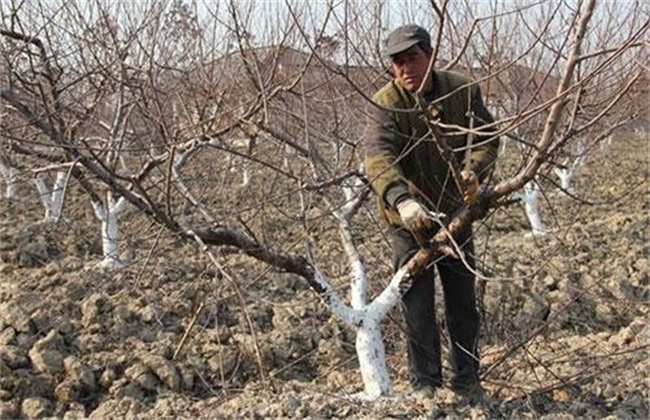
1. Winter pruning time
When carrying out winter pruning on peach trees, it should be done within the period from December to February. The pruning time is very important; it must not be too early or too late, as pruning too early or too late will cause the peach tree to consume a large amount of nutrients. This has a great impact on tree vigor, thereby affecting the peach tree's flowering and fruiting the following year. Moreover, when pruning, we should also pay attention to the planted variety, which is generally divided into southern varieties and northern varieties. Among them, southern varieties should be winter-pruned in December. If it is a northern variety, then it must not be done in January when temperatures are at their lowest; it is best to winter-prune in early to mid-February.
2. Winter pruning methods
Apart from the main pruning time, the winter pruning methods for peach trees cannot be ignored either. Because the flower buds of peach trees are pure flower buds with a lateral characteristic. Therefore, when we winter-prune peach trees, we should mainly use heading back, supplemented by thinning and renewal pruning. During winter pruning, retain the flower-bud-like short fruit branches grown in the current year, and cut back all other branches. Moreover, the flower-bud-like short fruit branches should be thinned or left unpruned. For competing branches that grow upright, such as scaffold branches and extension branches, thinning should also be carried out. At the same time, if there are fruiting branch groups that have grown too long and too dense, then appropriate renewal pruning should be done.
3. Degree of winter pruning
Then we should also pay attention to controlling the degree of winter pruning. First, we should prune according to the actual conditions of the planting area. For example, if the annual precipitation is not much, then the growth of peach tree branches will not be very large, so heavy heading back should be carried out to promote fruiting and shoot growth. Then pruning should be carried out according to the growth characteristics of the planted variety; for example, southern varieties of peach trees grow relatively moderately, so when heading back, it should be appropriately heavier. And some medium and long fruit branches should be retained. On the contrary, because northern varieties grow relatively vigorously, light heading back should be used, and the fruiting branches should mainly be medium and short fruit branches and flower-bud-like short fruit branches.
Finally, we should also prune according to the type of branch. When pruning extension branches, the pruning should be kept to a degree where many branches are produced and the base is not bare. When pruning water sprouts, apart from retaining some outer branches and branch groups in bare parts of the inner canopy for fruiting, all water sprouts should be thinned from the base. For another example, when pruning overly vigorous fruiting branches, the principle should be heavy heading back, letting them bear about 4 fruits, and then growing many long, medium and short fruit branches, cultivating them into fruiting branch groups.
The above is a brief introduction to when is the best time for winter pruning of peach trees. That is all for today's introduction. This article is for reference only, and I hope it can be helpful to everyone!