Detailed Explanation of Control Measures for Mango Dew Spot
During the growing period, mangoes can develop a disease called dew spot. Its characteristic symptom is "dew"-like lesions on the fruit surface, and in the morning when dew collects on the lesions they are extremely obvious. So how should mango dew spot be controlled? Follow the editor and take a look.
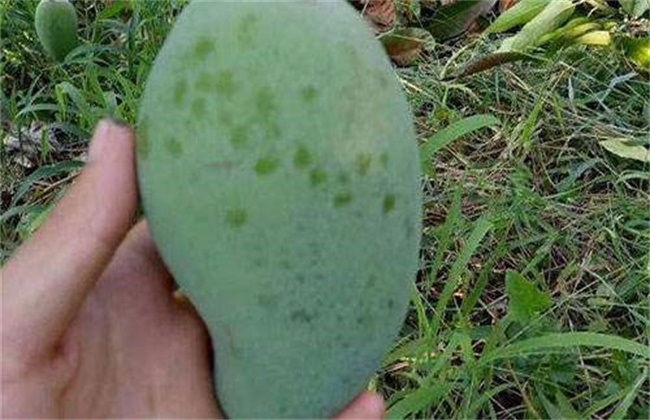
I. Disease Symptoms
The disease mainly breaks out during the fruit harvest period. In the early stage of the disease, water-soaked mottling appears on the fruit surface. The size of the lesions is irregular, and when field humidity is high, a green mold layer appears on the lesions. The disease has little effect on the flesh quality of the fruit, but it affects the appearance quality of the fruit. In severe cases, the entire fruit surface becomes covered with dark brown dirty spots, greatly reducing the commercial value of the fruit. The poor appearance brings relatively large economic losses to farmers.
II. Control Methods
1. Choose varieties with strong disease resistance
Combine the local climate characteristics, choose varieties with strong disease resistance according to local conditions, plant disease-free seedlings, and try not to mix varieties from different climate periods.
2. Pruning and training
After mango harvest and before new shoots emerge, timely and reasonable pruning should be carried out. After pruning, an anticorrosive film should be applied to the cut surfaces to promote wound healing and prevent pathogens from invading. While pruning, also train the branches, removing all overly dense branches, crossing branches, and diseased or pest-infested branches. At the same time, thin flowers and fruits, retain a suitable fruit load for the plant, and enhance orchard ventilation and light penetration.
3. Orchard cleaning
Before mango flowering, diseased branches and dead branches should be thoroughly cleaned up and burned in a centralized manner or buried deeply. Miscellaneous fruits and residual flower panicles should be removed in time to keep the orchard clean.
4. Bagging
Timely bagging of the fruit can reduce the chance of disease infection. Bagging is generally carried out at the second physiological fruit drop. When bagging, ensure that the folding of the bag opening is conducive to drainage, and tie it tightly to prevent rainwater from entering the bag.
5. Strengthen fertilizer and water management
Try to achieve formula fertilization, balance tree nutrition, improve disease resistance, and promote neat and orderly shoot emergence and flowering for unified management. First, improve the orchard drainage and irrigation facilities, and drain water in time during the rainy season to avoid waterlogging and root damage; second, increase the application of organic fertilizer to promote tree vigor and improve stress resistance and immunity; third, pay attention to the application of micronutrient fertilizers to promote the wax coating on the fruit and reduce the chance of water droplets directly contacting the peel.
6. Chemical control
Before pruning or flowering, lime sulfur mixture or Bordeaux mixture can be sprayed to prevent the disease, or in the early fruit-setting stage, systemic fungicides such as carbendazim and chlorothalonil can be sprayed for protection.
The above is an introduction to the control measures for mango dew spot. We hope it can help you. To learn more related knowledge, please stay tuned to us.