How to control blueberry white grubs? A few practical methods to teach you
White grubs are a major pest in blueberry cultivation, mainly attacking the blueberry root system, constantly gnawing on it. In blueberries gnawed by white grubs, the leaves first turn yellow, and eventually the branches and leaves wither and die, and root rot can also be triggered, causing great harm to blueberries. So how should blueberries be protected against white grubs? Let's take a look.
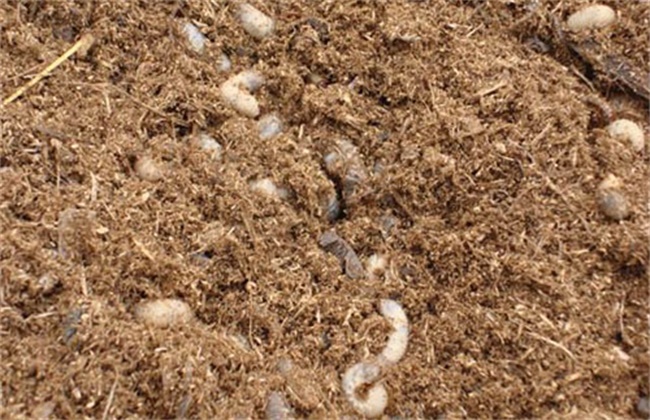
1. Damage identification
White grubs mainly harm the plant root system, and it is generally not noticeable when they strike, so the first thing is to identify them. First, look at the leaves: after white grubs bite and feed on the fibrous roots of blueberries, the plant quickly shows signs of water shortage, with leaves turning yellow in the early stage and drying up in the later stage; the likelihood of white grub damage is then very high. Next, look at the roots: in severe cases, only the main root is left after feeding. Then comes looking for the insects: when the above two symptoms are present, cut open the soil around the root system, and white grubs can often be found at this point.
2. Agricultural control
During winter pruning each year, cut off diseased branches and pest-infested branches, and clear weeds. When fertilizing in autumn and winter, dig the soil 20 cm deep, increase the number of times the land is plowed, plow deep and harrow more, and cultivate intensively; this can eliminate a large number of overwintering larvae. After that, strengthen fertilizer and water management, apply more phosphorus and potassium fertilizer and micronutrient fertilizer, to promote robust blueberry growth and improve resistance to pests. Remember not to apply undecomposed farmyard manure.
3. Physical control
Physical control mainly targets the mating and egg-laying of the adults, which is the key to controlling white grubs. Insect-killing lamps for trapping and killing, sugar-vinegar liquid trapping and killing, manual capture, and poisonous soil trapping and killing can all be used; these methods can all control white grubs very well.
4. Biological control
At present, biological agents for controlling white grubs include Beauveria bassiana, Metarhizium anisopliae, Bacillus thuringiensis and Paecilomyces, among which Beauveria bassiana and Metarhizium anisopliae are among the most ideal agents for current white grub control, being highly effective, non-toxic and pollution-free. In seriously affected plots, you can also use scattered vacant land at the edge of the field, and at the right time sow hemp, Abutilon theophrasti or castor bean and other plants early. During the peak period of white grubs, the stems and leaves of hemp plants can be mashed and soaked in water for 2 to 3 days for watering, and the insect-killing effect of this is also quite good.
The above is an introduction to control methods for blueberry white grubs. We hope it helps you. To learn more related knowledge, please stay tuned to us.