What is the correct method for watering an apple orchard with freezing water?
After apple trees enter winter, they enter a dormant period, and at this time the plant's nutrients flow back from the tree body to the root system. Watering with freezing water at this time not only ensures the fruit trees survive the winter safely, but also lays a solid foundation for the fruit trees. However, watering an apple orchard with freezing water requires mastering certain techniques. Let's take a look below.
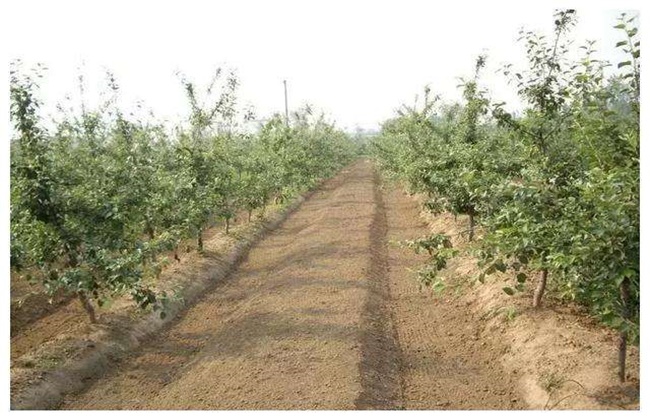
1. Winter irrigation timing
The timing of winter irrigation in an apple orchard must be well controlled. If winter irrigation is too early, the temperature is relatively high and evaporation is large, which is not only unfavorable for storing water and preserving soil moisture, but also reduces the fruit trees' ability to resist cold and freezing. However, if winter irrigation is too late, it will cause soil compaction, water will be unable to infiltrate, and accumulated water will freeze, making the root system highly susceptible to freeze damage. The best time for winter irrigation is when the average soil temperature at a depth of 5 cm is 5 degrees, and 3 degrees during the day is suitable. Although the nighttime temperature will drop below 0 degrees and freezing will occur, it will thaw after the daytime temperature rises again. Generally, mid-November is the best time for winter irrigation.
2. Irrigation volume
The irrigation volume before fruit trees enter winter should be such that on the same day after irrigation, the water can completely infiltrate down to the root distribution layer, that is, 30 cm for young fruit trees and 70 cm for mature fruit trees, and the soil moisture should remain at 60%-80% of the maximum water-holding capacity. If it is too little, it cannot meet the needs of the fruit trees, but if it is too much, it will wash nutrients to places where there is no root distribution, which not only wastes fertilizer but also takes time and effort. After irrigating for 2-3 hours, you can dig a pit around the outer edge of the tree canopy to see the depth of water seepage.
3. Irrigation methods
There are many methods of winter irrigation, such as furrow irrigation, hole irrigation, basin irrigation, drip irrigation, etc. Furrow irrigation is a relatively reasonable method for orchard winter irrigation. First, dig irrigation furrows between the orchard rows, with a furrow depth of 25 cm, then irrigate along the furrows, with a distance of 1.5 m from the trees, and fill the furrows level after irrigation. The advantages of furrow irrigation are uniform wetting, less water evaporation and loss, prevention of soil structure damage, benefit to soil microbial activity, and no soil compaction.
4. Mulching to preserve soil moisture
After irrigation, the orchard can be fully covered with rice straw, wheat stubble, straw, weeds, etc., to preserve soil moisture and prevent freezing. When covering, the mulch can be cut into short sections of about 10 cm to prevent it from being blown up by the wind. If there are no conditions for mulching, you can promptly shallow hoe and loosen the soil after irrigation, which can effectively prevent and reduce water evaporation.
The above is an introduction to how to water an apple orchard with freezing water. We hope it can help you. If you want to learn more related knowledge, please follow us.