What are the control methods for strawberry powdery mildew?
Strawberry powdery mildew is an extremely common disease in strawberry production. It generally causes a 20%-30% reduction in strawberry yield, and may even lead to a total crop failure, seriously affecting the economic returns of strawberry cultivation. So how should strawberry powdery mildew be controlled? Follow the editor to learn more about it in detail.
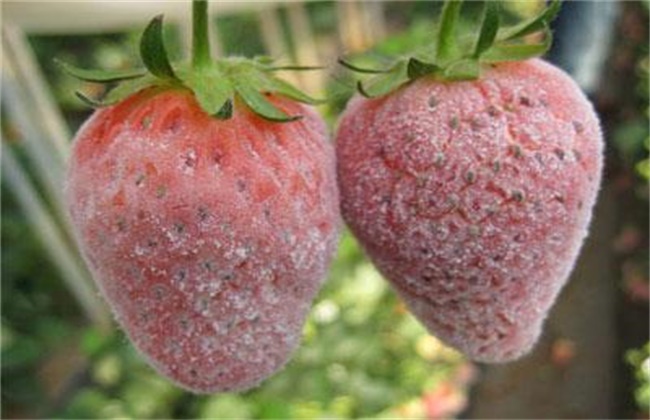
1. Symptoms
Powdery mildew can occur throughout the entire growth period of strawberries, mainly infecting strawberry leaves, flowers and fruits. In the early stage of leaf infection, dark spots of varying sizes appear. As time goes on, a white powdery substance forms on the leaf spots, and later the lesions turn reddish-brown, with the leaf margins gradually shrinking and scorching. After flowers are infected, the petals may turn red, preventing the flower buds from opening fully. After young fruits are infected, they cannot expand normally and wither and shrink. After mature fruits are infected, a layer of white fuzz appears, and the coloring becomes uneven, seriously affecting fruit quality and edible value.
2. Causes of the disease
The pathogen mostly completes its annual cycle generation after generation on the host as mycelium and conidia. The conidia spread through airflow, invade through germ tubes and haustoria, and multiply rapidly. After one week, mycelium can form, and then new conidia form, which then spread through airflow. Given the presence of the pathogen, the epidemic of the disease depends on temperature and humidity. Within the range of 15-25 degrees, when humidity is above 80%, the disease spreads relatively quickly, showing the characteristics of low temperature and high humidity. In addition, insufficient base fertilizer, soil water shortage, or excessive watering, excessive application of nitrogen fertilizer, and insufficient light also favor the epidemic of the disease.
3. Control methods
Reasonable crop rotation can be adopted, as this can reduce the pathogen base and lessen the occurrence of the disease. When planting, powdery mildew-resistant varieties should be selected. When fertilizing, apply fertilizer reasonably and never apply nitrogen fertilizer excessively. Follow the principle of “better dry than wet” when watering, irrigate frequently with a small amount of water, and never flood-irrigate. Without affecting the normal growth of strawberries, extend the ventilation time as much as possible to reduce the humidity inside the greenhouse. When the disease occurs, diseased plants should be pulled out promptly and taken out of the field for disposal, then the diseased holes and the surrounding area should be sprayed with Tuzet (thiophanate) for control, so as to prevent the disease from spreading further.
The above is an introduction to the control methods for strawberry powdery mildew. We hope it can help you. To learn more related knowledge, please stay tuned to us.