What are the methods for distinguishing male from female kiwifruit trees?
Kiwifruit has fine, delicate flesh and a sweet-and-sour taste, and its nutritional value is extremely high, making it a fruit that everyone loves to eat. Although it is delicious, how to distinguish male from female when planting has stumped many growers. Kiwifruit is a dioecious plant, meaning it is divided into male and female; male trees do not bear fruit, so distinguishing male from female when planting is extremely important. So how do you do it? Follow the editor and take a look.
1. Look at the bud eyes
First, looking at the bud eyes, the bud eyes of most male kiwifruit trees are relatively protruding, while the bud eyes of female trees are sunken. Moreover, after the female tree blooms, the ovary will appear quite obvious, and after pollination, small fruits gradually form, while the male tree has no ovary, let alone small fruit formation.
2. Look at the flowers
Their flowers are the most obvious point of difference. First, the flowering time is different. The flowering time of male kiwifruit trees is generally earlier than that of female trees, so if you find in the orchard that some trees bloom earlier than others, then nine times out of ten they are male trees. Then look at the flower buds. Generally speaking, the flower buds of male plants are distributed relatively densely, mostly seven or eight growing densely together in one place, and the buds are relatively small; while the flower buds of female plants appear fewer and looser, with only a few buds on a single fruit stalk, and they are somewhat larger. After blooming, the male flower has only stamens, with no stigma in the middle, but a ring of pollen around the edge; while the female flower not only has stamens, but also has a stigma in the middle for fertilization.
3. Look at the bark
Their bark also has certain differences. The bark of male kiwifruit trees is relatively rough, the spots on the bark are also quite obvious, and the lenticels formed are generally round. In contrast, the bark of female kiwifruit trees is relatively smooth, and the lenticels on the surface are generally elongated. When distinguishing them, we only need to touch the bark and then carefully observe the lenticels to tell them apart well.
4. Look at the fruit
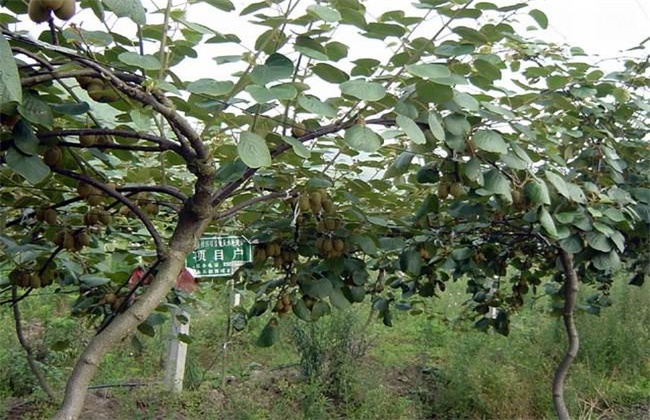
Male and female kiwifruit trees have a clear division of labor. Male trees do not bear fruit; they only produce pollen, while female trees are responsible for bearing fruit, but without the pollen of male trees, they cannot bear fruit on their own. So when they bear fruit, you can tell at a glance which is male and which is female. At this point, you only need to mark them well, and there will be no confusion afterward.
The above is an introduction to how to tell male from female kiwifruit trees. We hope it can help you. If you want to learn more related knowledge, please stay tuned to us.