Detailed Explanation of Grape Winter Pruning Methods and Precautions
Winter pruning of grapes is mainly to maintain the tree shape, regulate tree growth and fruiting, improve the ventilation and air permeability of the plant, adjust the bearing position of the fruiting mother branches, and also renew and rejuvenate the fruiting mother branches. So when is the time for grape winter pruning? How should it be done in winter? Let's take a look together.
I. Winter pruning time
Grape winter pruning requires cutting off one-third to two-thirds of the canes, so winter pruning must take into account the nutrient loss of the pruned canes. Pruning too early or too late will both cause the loss of nutrients stored in the grape, which is not conducive to the next year's sprouting, flower bud differentiation, and new shoot growth. The best pruning time is from when the tree fully enters dormancy to one month before the bleeding period, while winter pruning for greenhouse cultivation should be completed before film mulching. The southern region is relatively warm, so it should be carried out from late December to January of the following year; while the northern region has lower temperatures, so the best pruning time should be from late October to mid-to-late November.
II. Winter pruning methods
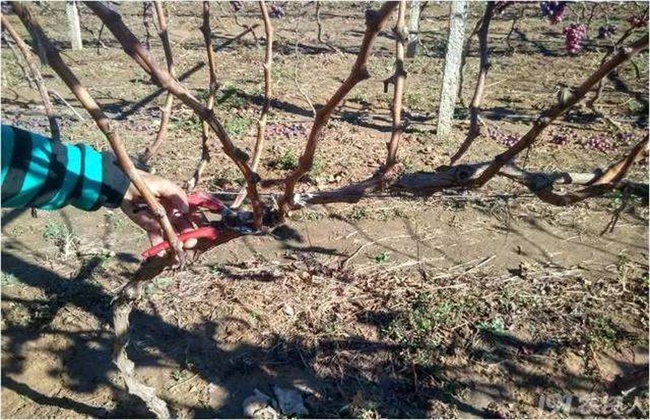
Winter pruning should determine the selection and retention of fruiting branches according to the plant yield and the growth vigor of the canes, and control the number of fruiting branches per square meter well; when pruning, it should be carried out in the order from trunk to cane, from main branch to side branch, then fruiting branches, thinning, renewal pruning, and heading back. Specifically, for pruning and retention, vigorous one-year-old shoots should be selected as fruiting mother branches, with a thickness of more than 0.8 cm. For renewal pruning of perennial branches, weak branches should be renewed by leaving a strong branch below the cut; while for renewal pruning of strong branches, a moderate branch should be left below the cut. Thinning should be cut off completely from the base. During pruning, attention should be paid not to make too many wounds, so as not to affect the growth and development of the bearing branches.
III. Pruning precautions
First, identify the mother branches. Only high-quality fruiting mother branches can have a high sprouting rate, strong branching ability, and good flower bud differentiation in the second year, laying a solid foundation for high yield and high quality in the coming year. Therefore, mother branches should be selected with a deep color and luster, fully mature canes, and base stem nodes with a thickness of more than 0.8-1.2 cm. When pruning, the pruning length should be determined by combining growth vigor, fruiting branch rate, and the height of flower bud bearing positions. The pruning cut should be 2-4 cm away from the bud eye, which can prevent the bud eye area from drying out due to water evaporation and causing dead branches. The cut should also be made on the side opposite the cut bud as much as possible.
The above is an introduction to grape winter pruning methods and precautions. I hope it can help you. If you want to learn more related knowledge, please stay tuned to us.