What are the causes and solutions for premature aging in kiwifruit
In the process of growing kiwifruit, farmers often encounter the phenomenon of premature aging in kiwifruit. Premature aging severely shortens the fruiting years of kiwifruit and brings huge economic losses to farmers. So what causes premature aging in kiwifruit? What should be done about it? Let's take a look together.
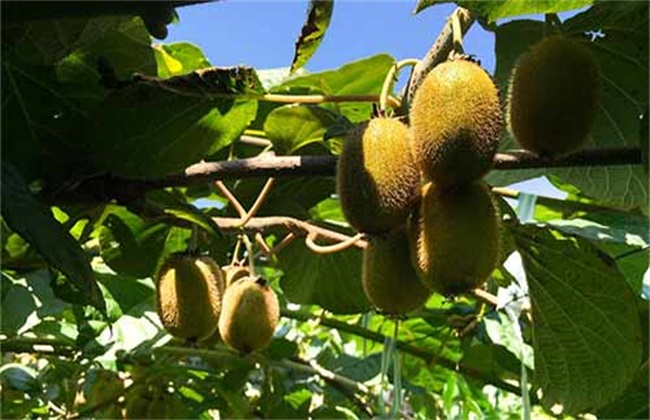
I. Causes of premature aging in kiwifruit
1. Improper early fruiting
In fruit management, being eager to set fruit and eagerly pursuing yield leads to severe overloading of the tree, depletion of nutrient reserves, and the appearance of alternate bearing. Although the tree body remains, its resistance declines, leading to an outbreak of diseases. Therefore, being eager to set fruit and forcing high yields is the number one harmful factor causing premature aging of the tree and a short fruiting life.
2. Poor root system
Because of unreasonable fertilization and soil cultivation during the rainy season, the soil degrades and becomes compacted into blocks, the storage roots develop root rot, or the planting is too deep and root growth is inhibited. Or a large amount of chemical fertilizer is applied, especially excessive nitrogen fertilizer, without attention to formula fertilization and the application of organic fertilizer. All of this leads to poor root growth and development, resulting in poor root absorption capacity, causing tree decline and shortening the fruiting years.
II. Solutions
1. Scientific fertilization
After fruit harvest and before leaf fall, sufficient base fertilizer should be applied. In June, more nitrogen fertilizer should be applied to promote shoot growth. From July to October, nitrogen fertilizer application should be controlled and phosphorus and potassium fertilizer should be increased to promote fruit growth. The autumn base fertilizer should be a full-element fertilizer, mainly organic fertilizer, combined with chemical fertilizer and microbial bacterial fertilizer, to ensure the needs of kiwifruit for sprouting, flowering, and fruit setting the following year.
2. Deep plowing and hole expansion
While applying base fertilizer, deep plowing and hole expansion should be carried out promptly. At the same time, cut off the aged roots at the tips to stimulate new root growth. After cutting the roots, apply more organic fertilizer, then water and cover with soil.
3. Irrigation and moisture conservation
Because the tree is prematurely aged and the root absorption capacity is relatively poor, it is necessary to seize the fertilization and watering work before the new shoots grow vigorously. It is also necessary to carry out foliar topdressing multiple times, such as spraying leaf fertilizer. This can promote the new roots to become vigorous and stimulate new root growth.
4. Scientific retention of flowers and fruits
For tree bodies with relatively severe aging, fewer flowers and fruits should be retained, or simply no flowers and no fruits should be retained. On the scaffold branches, try to avoid creating wounds, especially large wounds, so as not to weaken tree vigor and hinder healthy tree growth.
5. Scientific pruning
Pruning should be carried out reasonably. When pruning vigorous trees, medium to slightly weak branches should be selected and retained. Conversely, when pruning weak trees, medium to slightly vigorous branches should be selected and retained. Fruiting branches should be renewed and rejuvenated promptly, retaining one fruiting branch, cultivating one branch for the next year, and maintaining one vegetative branch.
The above is an introduction to the causes of and solutions for premature aging in kiwifruit. We hope it can help you. To learn more related knowledge, please stay tuned to us.