What should be noted before introducing passion fruit?
Passion fruit is one of the more popular fruits in recent years, and it is currently cultivated only in a few southern provinces. It has the reputation of "king of fruit drinks," with extremely high medicinal value and good economic returns. Many places are currently carrying out introduction work, so what should be noted when introducing passion fruit? Let's take a look together.
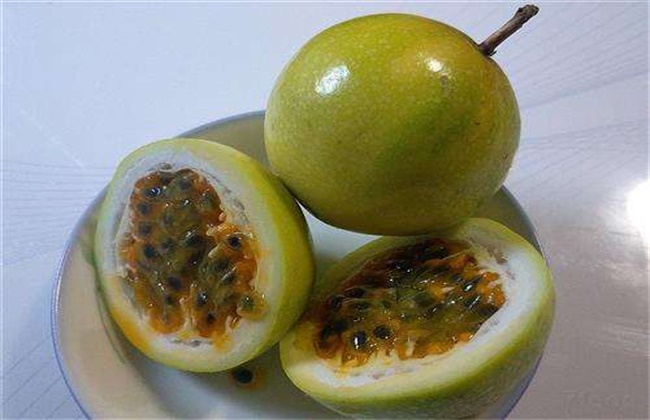
1. Pay attention to climate
Passion fruit is a typical subtropical fruit, with a suitable growing temperature between 20-30 degrees. Generally, as long as the temperature does not drop below 0 degrees, it can grow normally. Once the temperature falls below minus 2 degrees, its plants will suffer frost damage. Therefore, areas where winter temperatures drop below zero should pay attention when introducing it, and need to use greenhouses. Passion fruit does not have very strict rainfall requirements, so when cultivating it, simply choose an area with convenient drainage and irrigation.
2. Land selection
Passion fruit has extremely strong adaptability, so its soil requirements are not high. However, if planting on a large scale, in order to ensure yield and returns, plots with deep, loose, fertile soil and good drainage should be selected. If cultivating in paddy fields or flat land, high ridges must be made. If the soil fertility is poor, soil improvement is also needed before planting to create an environment suitable for passion fruit growth, so that high yield and high quality can be obtained.
3. Variety selection
At present, the most widely cultivated passion fruit variety is Zixing. It is one of the more cold-tolerant passion fruit varieties, with excellent quality, rich fruit aroma, and a high natural pollination rate. It is also relatively easy to manage during cultivation, which helps increase yield. In addition, many areas also cultivate the Man Tian Xing variety, which has advantages such as strong disease resistance, fast growth, and high fruit sweetness. However, when introducing it, the variety should still be reasonably selected according to local actual conditions. After all, the one that suits you is the best.
4. Cultivation management
Passion fruit grows vigorously and easily, has few pests and diseases, and its management techniques are simple and easy to master. The key techniques in cultivation management are trellising, pruning and training, and fertilizer and water management. For the harvest period, it is best to wait until the fruit is ripe and naturally falls, and to collect the fallen fruit promptly. Unripe fruit should not be picked early, otherwise the juice will taste rather sour and astringent.
5. Marketing
Passion fruit has many uses and can be eaten in many ways. It can be eaten fresh or processed into various products, such as juice and preserved fruit. However, more and more people are cultivating it. If it is used as fresh fruit, sales volume is not large, since at room temperature it can only be kept fresh for 7-10 days. If it is processed into products, then market demand is large and the shelf life is longer. It is best to cooperate with enterprises and expand sales channels more.
The above is an introduction to the points to note before introducing passion fruit. We hope it can help you. If you want to learn more related knowledge, please stay tuned to us.