Detailed Explanation of the Causes of Apricot Fruit Cracking and Prevention Measures
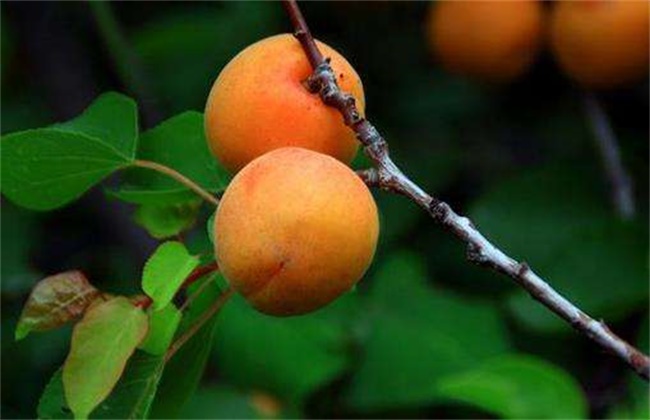
Apricot fruit cracking is a common problem during apricot cultivation. It not only reduces the commercial value of the fruit, but also brings huge economic losses to farmers. Most fruits crack in strips centered on the fruit apex, extending radially toward the body and shoulders of the fruit, and some crack from the suture line, reaching all the way to the pit. So what causes apricot fruit cracking? How can it be prevented? Let's take a look together.
1. Variety reasons
Because apricot varieties differ, their probability and degree of fruit cracking also vary. Among them, medium and large fruits crack more easily than small fruits, flat-round fruits more easily than round fruits, and early-maturing fruits more easily than late-maturing fruits. When rain occurs during the apricot ripening period, varieties with thin skins and soft texture are also prone to cracking.
Prevention measures: Suitable varieties should be selected according to local climate conditions. It is recommended to choose crack-resistant varieties that are early or late maturing, with good flesh elasticity and low plasticity, such as Dahuang, Erhong, Chuanhong apricot, and so on.
2. Improper soil
The growth and development of apricot trees have certain requirements for soil. If they are planted on plots with heavy clay soil, fruit cracking in apricot trees is extremely common, because clay soil undergoes drastic changes between dry and wet conditions.
Prevention measures: Therefore, before planting, the plot should be selected, and loose, fertile sandy loam soil should be chosen as much as possible. Soil structure can also be improved by amending the soil and applying more organic fertilizer, increasing the soil's permeability and water-holding capacity, so that the soil supplies water evenly and the possibility of fruit cracking is reduced.
3. Excessive water
If continuous rainy weather occurs during the apricot fruit ripening period, or if long drought is followed by rain, or if flood irrigation is used, the fruit will absorb a large amount of water and crack. Therefore, in many regions, if there is a lot of rain that year, the fruit cracking phenomenon is more serious.
Prevention measures: Apricot trees are not tolerant of waterlogging, so drainage should be carried out in time during rain, otherwise it will not only cause fruit cracking, but is also very likely to cause root rot due to water accumulation. During drought, watering should be done in time, with drip irrigation or sprinkler irrigation being best. Flood irrigation is not suitable, especially during the fruit ripening period, and the soil should be prevented from becoming too dry or too wet.
4. Fruit growth reasons
Apricots begin to crack during the second rapid growth period of the fruit, and it is most serious in the coloring area during the coloring stage. At this time, a large amount of soluble sugar in the fruit is transformed and accumulated, and the pressure resistance of the fruit skin decreases. If rain comes after a long drought, the flesh absorbs too much water and directly splits the skin, causing fruit cracking.
Prevention measures: Chemical agents or growth regulators can be used for treatment. A rare earth solution or naphthalene acetic acid solution can be sprayed once each during the fruit expansion stage and the coloring stage, which can significantly reduce the fruit cracking phenomenon.
The above is an introduction to the causes of apricot fruit cracking and prevention measures. We hope it can help you. If you want to learn more related knowledge, please stay tuned to us.