How to manage cherry tomatoes during the seedling stage? These key points you need to master
Cherry tomatoes are also called Millennium fruits. Their taste is similar to that of tomatoes, and they can be stir-fried as a vegetable or eaten raw as a fruit. Cherry tomatoes have relatively high nutritional value and are very popular with many people. Therefore, the planting area of cherry tomatoes is now also relatively large. When planting cherry tomatoes, we should do a good job of management according to their growth stages. So how should cherry tomatoes be managed during the seedling stage? Let's take a look below!
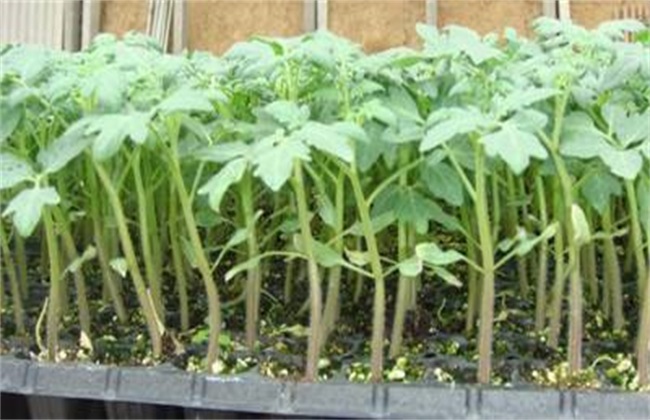
1. Temperature management
During the seedling stage of cherry tomatoes, temperature control is very critical. It should be controlled at around 28°C, and the day-night temperature difference should be kept at around 10°C. At night, the temperature should not be lower than 13°C even at its lowest. Then, during the period from full emergence to seedling separation, the temperature should be kept at around 22°C. Then, after seedling separation, the temperature should be raised back to 28°C. Throughout the entire seedling stage, the temperature should be adjusted according to the growth condition of the seedlings. Controlling the temperature well is very important for the growth of cherry tomatoes, so everyone must pay close attention to it.
2. Ventilation and disease prevention
Before cherry tomatoes have fully emerged, a high-temperature environment should be provided appropriately to promote the emergence of cherry tomato seedlings as quickly as possible. After the cotyledons of the seedlings unfold, the temperature should be lowered appropriately, mainly by ventilation for cooling. The daytime temperature should be kept at around 20°C, and the nighttime temperature at around 11°C. After the seedlings grow true leaves, reduce the amount of ventilation, and then pay attention to increasing the light duration to promote the growth of the cotyledons. After cherry tomatoes grow two true leaves and one heart leaf, appropriately spray chlorothalonil or mancozeb once to do a good job of disease prevention.
3. Reasonable fertilization
During the seedling stage of cherry tomatoes, the demand for nutrients is relatively large. Therefore, during the seedling stage, we should also pay attention to doing a good job of fertilization. Fertilization should be carried out reasonably according to the growth condition of the cherry tomato seedlings, providing sufficient nutrients for the seedlings and promoting their growth. When the cherry tomato seedlings grow to about 3 leaves, appropriately apply seedling-promoting fertilizer, about 3 times in total. The fertilizer should mainly be compound fertilizer such as nitrogen, phosphorus, and potassium, and should not be applied alone; it should be applied together with watering to avoid burning the seedlings due to excessive fertilizer heat.
4. Timely hardening of seedlings
If cherry tomatoes are planted in open fields, they will be threatened by freezing damage. Therefore, before transplanting, we should pay attention to doing a good job of hardening the seedlings. When hardening the seedlings, ensure that the seedlings can withstand a low-temperature environment of minus 2°C to 1°C. During seedling hardening, gradually remove the straw mats, and slowly uncover the covering at night. Let the seedlings undergo the test of low temperatures in the open field. In the later stage of seedling hardening, pay attention to appropriately reducing the amount of watering. This is because a slightly dry environment can also play a role in hardening the seedlings.
The above is a brief introduction to the key points for managing cherry tomatoes during the seedling stage. That is all for today's introduction. This article is for reference only, and I hope it can help everyone!