What causes scarred fruit in dragon fruit, and how should it be prevented and controlled?
Scarred fruit in dragon fruit is what is called rough skin, and it seriously affects the quality of dragon fruit, causing it to lose its commercial value and resulting in relatively large economic losses. Based on the size of the scarred area, it is divided into small scars and large scars, and their causes are different. Let's take a look below at the control measures for scarred fruit in dragon fruit.
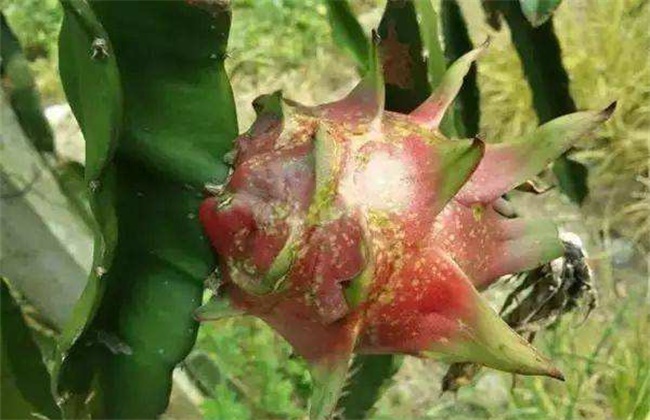
I. Causes of scarred fruit
1. Pesticide use for large scars
This is mainly caused by feeding damage from the tobacco cutworm and by the relatively low retained branches being directly burned by herbicide, producing large areas of scorched spots that cover a very large portion of the fruit. Once this occurs, the fruit is generally inedible.
2. Causes of small scars
In the south, rainfall is relatively heavy, and the effects of acid rain or failure to apply pesticide in time lead to small scars; during the rainy season, improper disease prevention, especially of canker, will lead to scarring if prevention is not timely. In addition, improper pesticide use causes relatively severe outbreaks of canker, which also leads to scarring. Arbitrarily increasing the concentration of chemicals causes scorched spots to remain on the fruit, resulting in scarring. Also, if pests such as ants and cottony cushion scale are not controlled in time or the application method is incorrect, wounds form on the fruit, and under high temperatures small spots develop, forming scars.
II. Control measures
1. Choose sandy soil
Before establishing the orchard, sandy soil should be chosen for the site, and the soil moisture content should be kept as low as possible through watering. If there is too much soil moisture, the resistance of dragon fruit declines, making it highly prone to pests and diseases, which ultimately causes scarred fruit.
2. Regular disinfection and sterilization
The soil of the fruit trees should be regularly disinfected and sterilized to protect fruit that has not yet been infected from pathogen infection. In daily management, rotten branches and weeds should be removed in time, taken out of the orchard, and wounds should be sprayed for protection.
3. Improve tree resistance
Dragon fruit is a cactus family plant and likes light while tolerating shade, and tolerates heat and drought. Therefore, during cultivation, attention should be paid to drainage and to fertilizer and water management to improve the resistance of the fruit trees, promote plant growth and development, and reduce the incidence of disease.
4. Choose varieties with higher resistance
Relatively speaking, white-fleshed dragon fruit has higher resistance than red-fleshed dragon fruit, so white-fleshed dragon fruit can be planted in appropriate amounts. However, red-fleshed dragon fruit has higher quality and a higher unit price, so most growers prefer to plant red-fleshed dragon fruit, which is also one of the reasons canker in dragon fruit occurs more and more frequently.
5. Control canker
Canker is prone to breaking out in high-temperature and high-humidity environments. Control should focus on prevention, combining prevention and treatment. Pyraclostrobin, procymidone, zhongshengmycin, or streptomycin can be sprayed, with good results.
The above is an introduction to the causes of scarred fruit in dragon fruit and control measures. We hope it can help you. For more related knowledge, please stay tuned to us.