How to prevent and control citrus black-skinned fruit? Detailed explanation of the key technical points
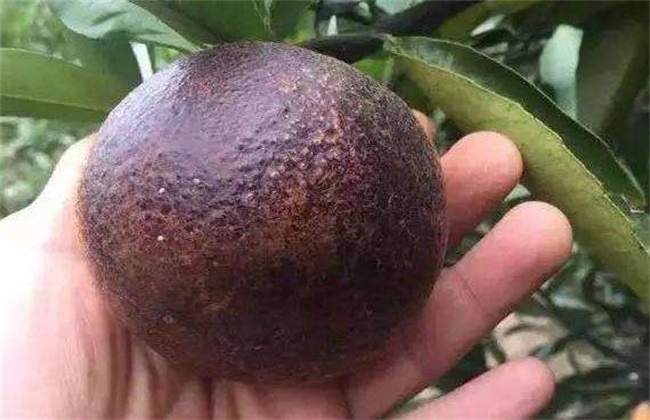
I believe many citrus or lemon growers are familiar with black-skinned fruit. This is a serious disease, generally appearing in summer or autumn, causing the fruit to taste sour and the skin to turn black, losing its commercial value and resulting in huge economic losses. So how should citrus black-skinned fruit be prevented and controlled? Let's find out together.
1. Causes
Citrus black-skinned fruit is caused by damage from the citrus rust mite, also known as rust spider, rust mite, or pear leaf blister mite. Adult mites, nymphs and larvae pierce the fruit and leaves with their piercing-sucking mouthparts to suck out the sap. When the oil cells of the fruit are destroyed, the overflowing oil is oxidized and turns brown to dirty black, so black-skinned fruit appears. It also damages the leaves, making them look as if they have been smoked. Once the fruit turns dark brown, the best control period has already been missed. It not only causes a large number of leaves to turn yellow and fall off, weakening the tree vigor, but also affects the yield of the following year.
2. Occurrence pattern
The host of the citrus rust mite is limited to citrus fruit trees. During its peak occurrence period, larvae, nymphs and adult mites can be seen at the same time. The adults occur in summer and autumn, and in the second half of the year they move to the spring shoots and their fruit to cause damage. In early May, they damage the undersides of the young leaves of spring shoots; after the leaves are damaged, the undersides show dark brown net-like patterns, and at the same time a large number of leaves fall. In mid-to-late May and early-to-mid June, they begin to damage the fruit, and July to September is the peak period, when the fruit suffers severe damage. If there is high temperature and high humidity weather, it is not conducive to the reproduction of the rust mite; if there is high temperature and drought weather, the damage by the rust mite worsens.
3. Control measures
The rust mite is very small, initially white, later turning pale yellow. When the infestation is severe, mites and eggs appear in patches on the leaves and fruit, so careful observation is needed during control. Generally, use a magnifying glass to observe the leaves and fruit surface. Once dust-like mite bodies are found, spray pesticide promptly for control. Lime sulfur mixture can be chosen as the pesticide; this is an effective agent for controlling the rust mite. When spraying, first spray the inner and lower parts of the tree canopy, then the outer and upper parts, focusing on the shaded sides of the fruit and leaves. Spraying is best done after 10 a.m. and after 5 p.m. Spray carefully and thoroughly, so that the leaves and fruit are moist but no liquid drips off. Generally spray 2 to 3 times in a row, with an interval of 7 to 10 days each time.
The above is an introduction to the prevention and control techniques for citrus black-skinned fruit. I hope it helps you. To learn more related knowledge, please follow us.