What are the winter freeze protection measures for plum trees
The plum is a fruit that many people enjoy eating, and its planting area in our country is also relatively large. When growing plum trees, we need to pay attention to doing a good job of management according to the changes of the seasons. If management is poor, various problems can easily arise. Especially in winter, plum trees are very easily damaged by freezing. So how should plum trees be protected from freezing in winter? Let's take a look together below!
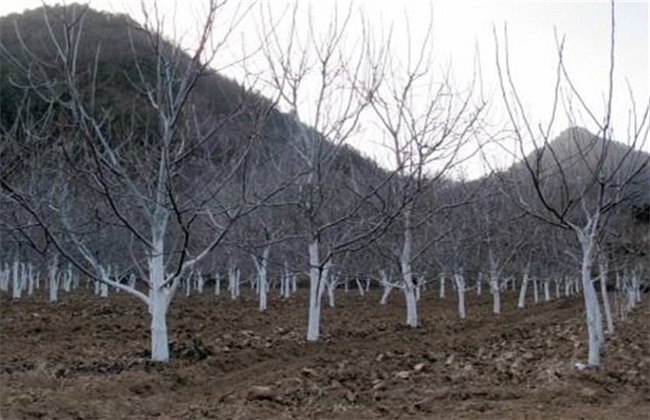
1. Irrigation and whitewashing
In winter and early spring, the temperature is very low, and at this time plum trees are very easily damaged by freezing. In spring, when plum trees begin to show signs of bud break, appropriate watering can lower the soil temperature and delay the sprouting time of plum trees. It is best to water about two more times after the plum trees sprout and before flowering, which can delay the flowering time by about three days, and appropriate watering before freeze damage can also appropriately raise the tree temperature and prevent the tree body from freeze damage. Whitewashing plum trees in winter can not only play a role in freeze protection, but also prevent and control pests and diseases.
2. Strengthen tree vigor
Freeze damage will cause damage to various organs of plum trees such as young fruit and leaf tips. Therefore, we should strengthen the tree vigor of plum trees, strengthen fertilizer and water management, and supplement nutrients for plum trees. To enhance the growth vigor and cold and disease resistance of plum trees, more fertilizer should be applied before and after the flowering period, mainly with fertilizer specially for fruit trees. It can also be combined with an appropriate amount of monopotassium phosphate or urea, etc., about once a week. It can not only enhance the growth vigor of plum trees, but also promote the recovery of tree vigor after plum trees suffer freeze damage, improving the fruit setting rate and the weight of individual fruits.
3. Reasonable pruning
After discovering that branches, leaves and fruit have suffered freeze damage, there is no need to rush to prune in the short term; the principle should be late fruit thinning and retaining as much fruit as possible. Keep some fruits that are not seriously damaged or not damaged at all, increase the fruit load, and minimize the losses caused by freeze damage. Then the plum trees should have their branches pulled and angles opened to inhibit the vegetative growth of the plum trees, so that the tree vigor can recover naturally. If the branches cannot recover due to freeze damage, then they should be pruned in time to the healthy part of the branch, so that they can quickly recover and sprout and grow branches again. The damaged branches and buds should also be removed to promote the germination and fruiting of latent buds.
4. Smoke fumigation for freeze protection
Smoke fumigation for freeze protection is a commonly used method for preventing freeze damage when growing plum trees. Its effect mainly depends on the quality of the smoke produced. When the orchard temperature is two degrees, the number of smoke piles per mu should be kept at least about 5 piles. The height and diameter of the grass piles can both be kept at about 150 cm, and then insert a few wooden sticks into the grass pile as ventilation holes. Then cover the surroundings of the grass pile with a layer of wet grass or wet mud to increase the amount of smoke and the smoking time. The smoke-producing materials can be straw, weeds and other substances. At temperatures above minus two degrees, the effect on freeze damage is very good; if it is below minus two degrees, then the effect will be affected.
The above is a brief introduction to winter freeze protection measures for plum trees. That is all for today's introduction. This article is for reference only, and I hope it can help everyone!