What are the summer pruning methods for persimmon trees?
Persimmon is a common fruit in our daily lives, and its planting area in China is also relatively large. When growing persimmon trees, we need to pay attention to proper management. And in management, pruning is very important, including summer pruning and winter pruning, among others. Summer pruning is what we need to focus on especially. So how should persimmon trees be pruned in summer? Below, the editor brings you the summer pruning methods for persimmon trees. Let's take a look!
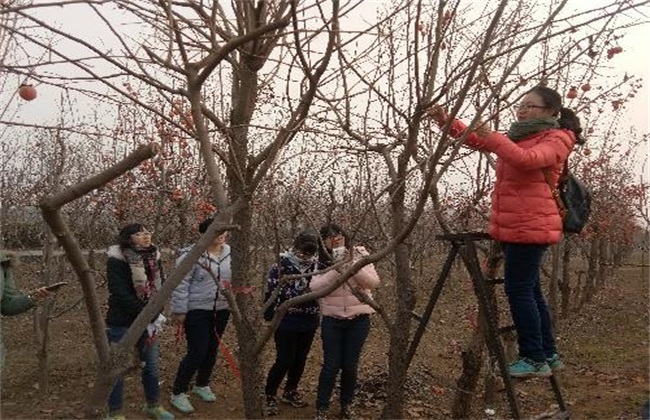
1. Bud removal
For young persimmon trees that have already been planted with the trunk headed, the main summer pruning method is bud removal. After the branches of young trees sprout, the new buds below the structural branches should be removed in time. For large trees, the buds produced at the forks of large branches, at the base of the stubs left after thinning, and at the bends of thick branches can be appropriately retained, while all other buds should be removed in time. Moreover, after large branches are cut back, many new buds will also sprout near some saw cuts. At this position, two sprouting shoots can be appropriately retained, and all the rest should be removed.
2. Pinching
Pinching is also a commonly used pruning method for persimmon trees in summer. For some branches with useful value and the developing branches on young trees, when they grow to about 35cm, they should be appropriately pinched to control branch growth. This allows them to quickly send out secondary branches, thereby growing into fruiting mother branches. For some new shoots produced by renewal and top-grafted branches, suitable positions should also be selected for pinching. This allows them to send out secondary and tertiary shoots, which are then cultivated into scaffold branches. For vigorously growing young trees, the extension shoots of the trunk and main lateral branches can be retained at about 40cm for pinching, increasing the number of branches and promoting crown formation.
3. Branch bending
Persimmon trees have relatively strong growth capacity, so their branches are generally quite upright. If left untreated, the crown can easily become closed and crowded, affecting the overall appearance of the persimmon tree and also having a great impact on yield. Therefore, when shaping young trees and top-grafted trees, we should combine this with branch bending. This eases tree vigor and improves the crown structure and the growth direction of branches. Make sure that before the new shoots become woody, the branches are bent according to the ideal angle and direction.
4. Girdling
Girdling is suitable for healthy young persimmon trees and for persimmon trees that grow vigorously but bloom little. When they enter the early flowering stage, they can be girdled to increase the fruit-setting rate of persimmon trees and reduce physiological fruit drop. Girdling means cutting in a ring around the trunk or main branches about two times. If it is a fruiting tree or a large fruiting branch group, then according to the actual situation, the girdling intensity can be appropriately increased. Make sure to reach the xylem, but be careful not to damage the mother branch. Keep adjacent girdling cuts at about 4cm.
The above is a brief introduction to the summer pruning methods for persimmon trees. That is all for today's introduction. This article is for reference only, and we hope it can help everyone!