Detailed Explanation of Key Techniques for Winter Pruning of Apple Trees
In apple cultivation, winter pruning is one of the important regulatory measures. By improving winter pruning, fruit growers can shape the tree structure, balance tree vigor, improve air and light penetration, and also increase the yield and quality of the coming year. So how should apple trees be pruned in winter? Let's take a look together.
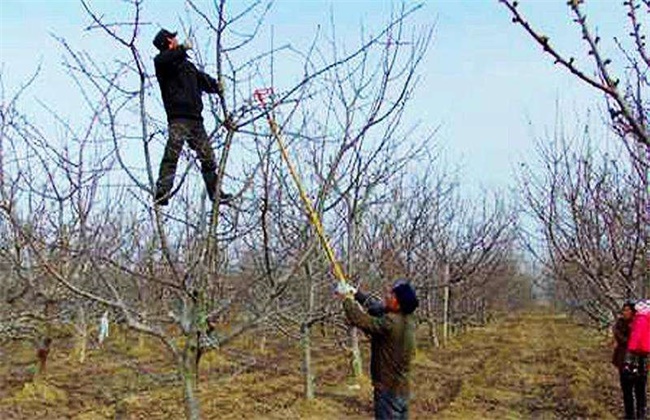
1. Pruning Time
The winter pruning time for apple trees is after leaf fall and before bud break, when the apple tree is in a period of growth stagnation. Pruning at this time causes less weakening to the tree body, and the renewal effect is better, making it an important period for apple tree shaping. However, apple pruning should also vary from tree to tree. Winter pruning can be divided according to tree age into three types: young trees, trees in the initial fruiting stage, and mature trees.
2. Pruning of Young Trees
The pruning of young trees is mainly carried out according to the principles of being mainly light, placing equal importance on shaping and fruiting, and promoting early yield increase. All the main branches on the central trunk can be pruned off from the base, so that they sprout again, making the branch age of the main trunk lower than that of the central trunk and maintaining the dominance of the central trunk. In the second year, remove the main branches at the base that are too thick, and do not touch the remaining branches.
3. Pruning of Trees in the Initial Fruiting Stage
After young trees have been planted for 5-8 years, they enter the fruiting stage. For trees in the initial fruiting stage, pruning is mainly focused on clearing dense large branches between the layers and improving the light conditions of the plant, so that the fruiting parts gradually transition to the scaffold branches. Dense areas should be cleared 2-3 times each year, and the clearing needs to be completed within three years. After several years of clearing, the small-crown sparse-layer form retains 5 main branches and 1-2 auxiliary branches, while the free spindle form needs to retain 10-13 main branches.
4. Pruning of Mature Trees
The purpose of pruning mature trees is to improve light conditions, enhance branch and trunk quality, and increase yield and quality, so the focus of pruning is to thin out, in batches, the overly dense branches and trunks above the second layer, allowing the large branches above the second layer to extend outward and receive sufficient light. If the canopy is too tall, the head should be lowered according to the tree's growth vigor, keeping the plant height below 3.5 m. At the same time, vigorous branches, crossing branches, whorled branches, and water sprouts should also be pruned off. After pruning, it is necessary to maintain branch forks, with many small branch forks. After pruning, be sure to apply wound healing agent to prevent pathogens from invading through the wounds.
The above is an introduction to winter pruning techniques for apple trees. I hope it can help you. If you want to learn more related knowledge, please stay tuned to us.