What precautions should be taken when girdling winter jujube trees?
Girdling is an important step in the process of growing winter jujube. It can effectively promote fruit set in winter jujube and ensure high yield, but when girdling, attention must be paid to timing and method, otherwise it will backfire. So what should be noted when girdling winter jujube? Let's take a look together.
1. Improper girdling time
Many fruit growers, when girdling, regardless of tree age, tree vigor and flowering conditions, blindly girdle, which often leads to young trees girdled before maturity declining prematurely, weak trees becoming even weaker after girdling, no fruit set when girdled at the initial flowering stage, and infection by pathogens when girdling encounters rain. This not only fails to improve the fruit set rate, but also affects plant growth. Therefore, girdling should vary according to the tree. First, look at tree age. Generally, trees 4-6 years old are suitable for girdling, while trees under 3 years old are not suitable for girdling; second, look at tree vigor. Girdling is mainly aimed at plants with strong vigor, and weak trees and weak branches should absolutely not be girdled; third, look at the flowering stage. The girdling time is closely related to the flowering time and the quantity and quality of flowering. It is advisable to choose the full bloom stage of 40%-60% for girdling; fourth, look at the weather. Try to choose a time when the average daily temperature is 22-26°C and there is no rainfall for more than 3 consecutive days for girdling, so as to prevent wound infection by bacteria.
2. Improper girdling method
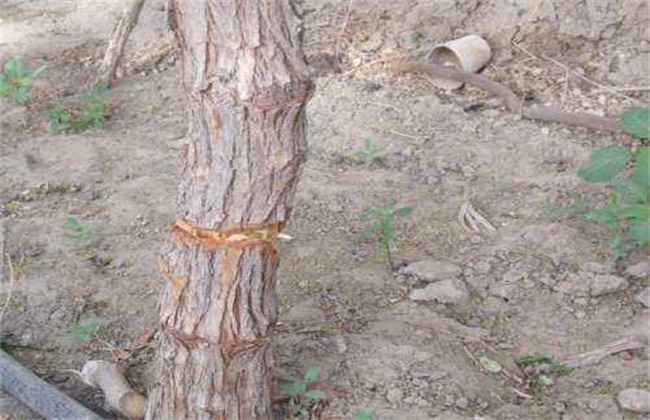
If the girdling width is too wide, the wound will not heal for a long time; if it is too narrow, it will heal in less than half a month; and if the girdling is uneven and the phloem is not removed cleanly, the xylem will be damaged. None of these can achieve the girdling effect, and they will also have a great impact on plant growth. Therefore, when girdling, first control the girdling position well. When girdling the trunk, start from a position about 20 cm from the ground; then control the girdling width well. Generally, the girdling width is one-tenth or one-eighth of the branch diameter; finally, control the smoothness and depth of the girdling cut. The girdling tool should be sharp, and the girdling depth should reach the xylem, but must not damage the xylem. Then remove all the phloem cleanly, so that the wound is smooth and flat, and the lower edge of the girdling cut is sloped to prevent water accumulation.
3. Improper wound protection
Some fruit growers neglect management after girdling, leaving the wound directly exposed. This will cause the wound to be harmed by pests and diseases, and in high temperature, drought and rainy weather, the wound is very likely to rot and necrose. Some fruit growers wrap the wound with plastic film after girdling, causing the wound to heal early and resulting in a large amount of fruit drop. After girdling, the wound should be dried for three days. In case of rain, drainage at the girdling cut should be done well to avoid bacterial infection. After that, spray a disinfecting and sterilizing agent once every week. After 15-20 days of girdling, apply gibberellin to the wound and wrap it with plastic film. Young shoots sprouting from the wound should be removed in time to reduce nutrient consumption.
The above is an introduction to the precautions for girdling winter jujube. I hope it can help you. To learn more related knowledge, please stay tuned to us.