Detailed Explanation of Key Points of Strawberry Mulching and Cold Protection Techniques
Strawberries are a fruit with a relatively high market price in China, but even despite the market price, they are still loved by many people. Therefore, strawberry cultivation is still very common nowadays. After strawberry cultivation enters winter, it is necessary to do a good job of mulching and cold protection. So how should strawberries be mulched? Today, the editor brings you the strawberry mulching and cold protection techniques. Below is a brief introduction for everyone. Let's take a look together!
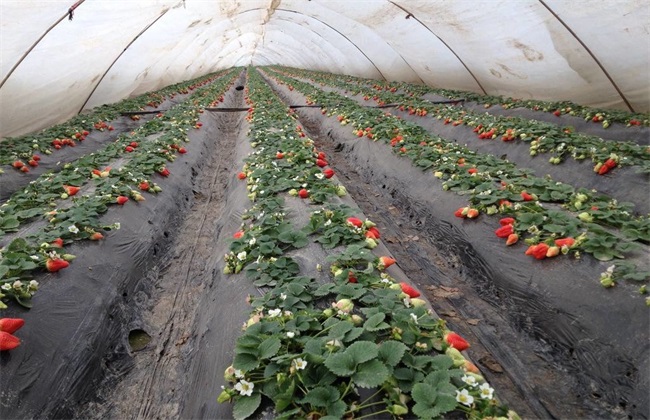
1. Covering time and materials
Before covering with plastic film, we must first water the soil once with antifreeze water, and the antifreeze water must be sufficient and thoroughly watered through. The watering time should be before the soil freezes, and then covering should be carried out about 7 days after watering. When covering, the choice of materials is very important. Not only can the common plastic film be used, but various crop straws, leaves, and fertile soil can also be used. If soil is used for covering, then it is best to first cover with a layer of grass and then cover with soil, to prevent damage to the strawberry plants when removing the soil.
2. Covering method ⟧7⟧The covering method is actually very simple. Just directly place the selected covering material on the planting plot. However, it should be noted that when covering, it is best to do it in two stages. When the antifreeze water has been well applied and the soil is slightly dry, first cover part of the covering material. Then after a few days, when the temperature has not risen, cover it all. When covering, the covering thickness should be controlled according to the local climate and the selected covering material. Usually, keeping the thickness at about 4 cm is sufficient. If it is grass, then the amount used per mu is about 500 jin.
The mulching method is actually very simple: just spread the chosen mulch material directly over the planting plot. However, note that when mulching, it is best to do it in two stages. Once the anti-freeze watering has gone well and the soil has dried slightly, first spread part of the mulch. Then, after a few days, if the temperature has not risen, spread the rest over the top. When mulching, the thickness should be controlled according to the local climate and the mulch material chosen. Usually a thickness of around 4 cm is sufficient; if straw is used, then about 500 jin per mu.
3. Plastic film covering
If plastic film covering is used, then the plastic film should be transparent polyethylene film. After watering the freezing water, wait until the soil is slightly dry, then level the entire bed surface. Then cover with film according to the direction of the bed. When covering with film, pull the plastic film tight and spread it flat. Press it down firmly around the edges with stones or soil, then place an appropriate amount of soil mounds in the middle of the plastic film to prevent wind from blowing it, and then cover it well with covering material. If there is a lot of accumulated snow, then set up windbreaks for cold protection instead of covering with film. Windbreaks should be set up about every 12 m, and various tall grain crops such as sorghum and corn can be used.
4. Removing the covering material
In the spring of the following year, when the soil begins to thaw, start removing the covering material. It is best to do this in two stages. The first time is when the daily average temperature is above zero, remove some of the covering material that has completely thawed. Especially when there is a lot of rain and snow in winter, it should be removed in time to allow the lower soil to thaw quickly and provide sufficient sunlight for the strawberry plants. Then, when the strawberries are about to sprout, carry out the second removal of the covering film. The time for removing the covering material should not be too late, to prevent damage to the new strawberry stems.
The above is a brief introduction to strawberry mulching and cold protection techniques. That is all for today's introduction. This article is for reference only, and I hope it can help everyone!