Causes and Solutions for Fruit Trees Blooming Out of Season in Autumn
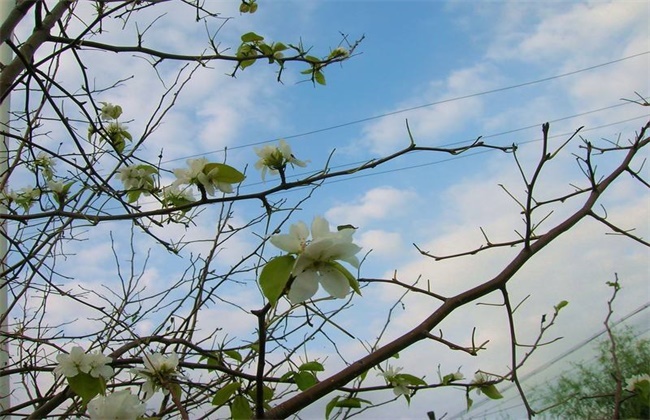
In recent years, the phenomenon of fruit trees blooming out of season in autumn has become quite common, especially in pear orchards and some poorly managed citrus orchards. In addition, some fruit trees such as peach and plum also bloom again in autumn, seriously affecting the yield and quality of the following year. Therefore, for this phenomenon, measures should be taken in the orchard in time to avoid a reduction in yield the following year. So what causes fruit trees to bloom out of season in autumn? How should it be solved? Let's take a look together.
1. Variety reasons
Different varieties of fruit trees have different adaptability to the external environment. When there is high temperature and drought in summer and autumn, if the fruit trees are not irrigated in time to resist the drought, then the nutrient absorption of the fruit trees decreases, the growth vigor weakens, and the vegetative growth is poor. At the same time, different fruit trees also respond differently to the stress caused by drought. In European varieties that are prone to stress, when the plant shifts from vegetative growth to reproductive growth, the possibility of blooming in autumn is greater.
Solution: When selecting varieties, be sure to choose varieties with strong adaptability, strong stress resistance, strong drought resistance, resistance to pests and diseases, and high yield, so as to avoid the occurrence of a second bloom.
2. Improper orchard management
If pruning is improper during orchard management, the canopy structure is chaotic, and ventilation and light transmission are poor, it is very easy to cause pest and disease damage and cause a large number of fallen leaves. The reason for premature leaf drop is that the accumulation of photosynthetic products in the fruit trees is small, and the nutrient storage in the tree body is low, which leads to unfavorable flower bud differentiation, causes an early entry into the dormant period, and triggers a second bloom in autumn. Sometimes orchards heavily apply chemical fertilizers, while organic fertilizers are not applied or are applied only in small amounts, resulting in poor tree vigor, which can also cause a large number of fallen leaves and promote the occurrence of a second bloom.
Solution: According to the different growth characteristics of fruit trees, fertilize reasonably, apply more organic fertilizer, enhance tree vigor, and reasonably match nitrogen, phosphorus, and potassium fertilizers. During the fruit growth period, spray foliar fertilizer in combination with fertilization.
3. Climate influence
If there is more rainfall in the orchard in summer, water accumulation will affect the growth and absorption capacity of the fruit trees, causing the tree vigor to weaken. If high temperature and drought weather occurs again in autumn, it will cause a large number of fallen leaves and a second bloom in the fruit trees. When warm spring-like weather occurs in November, and the soil has sufficient fertilizer and water, it will also cause flower buds to differentiate ahead of time and bloom out of season.
Solution: For low-lying orchards, open drainage ditches well, drain accumulated water in time when there is a lot of rain in summer, and when there is drought in autumn, divert water at the proper time to resist drought and protect the leaves.
4. Damage from pests and diseases
There are many types of pests and diseases that harm orchards such as pear, peach, and plum. When prevention and control are not timely or no control is carried out, they often cause a large number of fallen leaves in the orchard and early entry into the dormant period. When there is a lot of rainfall in autumn, under suitable climate conditions, a large number of out-of-season blooms will occur.
Solution: After fruit trees enter the leaf drop period and before spring sprouting, prune diseased and pest-infested branches, overly dense branches, excessively vigorous branches, and diseased and pest-infested fruits, and sweep up fallen leaves. After concentrating and burning them, bury the ashes deeply. In winter, spray lime sulfur mixture several times to reduce the pest and disease base.
The above is an introduction to the causes and solutions for fruit trees blooming out of season in autumn. I hope it can help you. If you want to learn more related knowledge, please follow us.