Watermelon Vine Management Methods and Key Technical Points
Watermelon can be said to be one of the most popular fruits, and it is also the fruit with the largest planting area in our country. When growing watermelons, management work is very important. And because watermelon is a vine-type crop, when managing it, special attention must be paid to doing a good job of vine management. So when growing watermelons, how should the watermelon vines be managed? Below, the editor will give everyone a brief introduction. Let's take a look together!
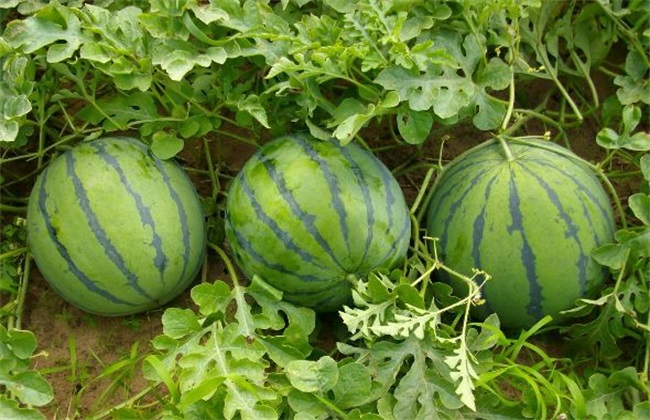
1. Turning the vines
There are many methods for managing watermelon vines, and the first of them is turning the vines. Turning the vines is very helpful for the growth of watermelons. It can promote vine growth, change the growth direction of the vines, and enable them to absorb more nutrients and water, thereby increasing watermelon yield and fruit quality. The time for turning watermelon vines should generally be when the plant has grown about 5 true leaves. When turning the vines, first place a piece of soil on the edge of the base of the vine on the side opposite to the growth direction of the main vine and pat it firm, so that the vine can lie on the ground at a slant along the direction it extends.
2. Arranging the vines
Arranging the vines is also a commonly used vine management method when growing watermelons. Because watermelon vines have a relatively strong growth capacity, if the vines are not arranged, they can easily become tangled with one another. This affects the growth between the vines, so after turning the vines, attention should be paid to arranging the vines on the left and right. When the vines are growing vigorously, the vines should be arranged about 2-3 times a week. When arranging the vines, the vines should be manually straightened so that the vines can be evenly distributed on the surface of the ridge. Vine tips that have extended outside the ridge should be promptly placed back inside the ridge and fixed in place.
3. Pressing the vines
Pressing the vines can keep the vines in a state of directional positioning, prompt the vines to produce adventitious roots, and thereby increase the plant's nutrient absorption area. Generally, vine pressing is carried out when the vines have grown to about 45 cm. First cover the vines with soil, then press once about every 5 nodes according to the nodes of the vine, and generally about four pressings are enough. Note that the two nodes before and after the fruit-setting area must not be pressed. Vine pressing should be done in the afternoon of a sunny day. The humidity on cloudy and rainy days and in the morning of sunny days is relatively high, so vine pressing must not be carried out then.
4. Pruning the vines
Pruning the vines is mainly to properly regulate the vegetative growth and reproductive growth of watermelons. Usually, the time for pruning the vines should be in June-July. There are generally single-vine and multiple-vine styles. The single-vine style is to prune away all the secondary vines of the watermelon plant and then keep only the main vine. The multiple-vine style is to keep the main vine and the thick, strong secondary vines about 4 nodes up on the main vine, and then prune away the excess secondary vines. We should reasonably choose the vine pruning method according to the characteristics of the planted variety, and we must also consider various factors such as planting density and soil fertility.
The above is a brief introduction to how to manage watermelon vines. That is all for today's introduction. This article is for reference only, and we hope it can help everyone!