What are the reasons apples do not color after the bags are removed?
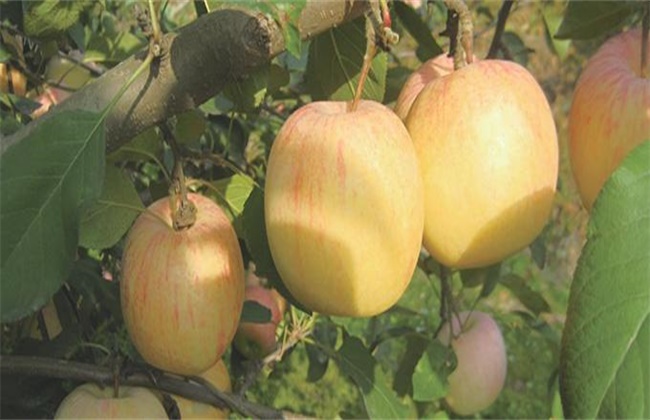
It is now the season when apples are heavily marketed, and it is the harvest season for fruit growers. To ensure yield and quality in apple cultivation, bagging and debagging techniques are now mostly used. However, recently some fruit growers have found that their apples do not color after the bags are removed, and some even turn green again, leading to a lower marketable rate. So what are the reasons apples do not color after the bags are removed? Let's find out together.
1. Unreasonable fertilizer application
In fruit tree fertilization, it is advocated to mainly use high-quality organic fertilizer, supplemented by chemical fertilizer, and then combine it with an appropriate amount of trace elements, so as to ensure a comprehensive nutrient supply for the tree and avoid a deficiency of some kind that affects the final yield and quality. However, in actual practice, many fruit growers, influenced by traditional thinking, tend to apply too much nitrogen fertilizer, causing excessive vegetative growth and a large number of shoots to sprout. Combined with improper pruning, this leads to poor light penetration in the fruit tree. For bagged apples, under poor light transmission, their chlorophyll content is relatively low, so after the bags are removed and the fruit is exposed to light, the rate of chlorophyll exchange accelerates, resulting in the fruit turning green again. In this case, fertilization must be scientific and reasonable: emphasize nitrogen fertilizer in the early growth stage, apply phosphorus and potassium fertilizers together in the middle growth stage, and in the later stage emphasize phosphorus and potassium fertilizer while reducing nitrogen fertilizer.
2. Inadequate pruning
Orchards where fruit turns green again after debagging generally show a closed canopy with no light, mostly due to a large number of shoots sprouting, high planting density, and dense branches. Apart from improper fertilization, another cause is inadequate pruning, which leads to increasingly dense branch growth. Therefore, pruning should be done at the right time. Pruning should mainly aim to create a good fruiting tree shape and a good ventilated and light-transmitting environment, which is beneficial for fruit coloring.
3. Choosing fruit bags
Since the promotion of fruit bagging technology, 90% of apple production in China has used bagging technology, and production costs have also increased. As the apple cultivation area has increased year by year, the bagging model has been widely promoted. Many fruit growers, to reduce planting costs, choose cheap, low-quality fruit bags. Alternatively, because market demand for fruit bags is large, a large number of manufacturers have entered the market, and the quality of the fruit bags produced varies greatly. When fruit growers choose lower-quality fruit bags, they end up with fruit that has an unattractive surface and a greenish color. Therefore, when choosing fruit bags, multiple aspects should be considered, ensuring the bags can withstand wind, sun, and rain without cracking, have strong light-blocking properties, do not leak water, and have good air permeability.
4. Poor timing of bag removal
The timing of removing apple bags is also important. Many fruit growers, in order to seize the market, often remove the bags 10-15 days early. This shortens the fruit's growth time inside the bag, causing the fruit to fail to fully lose its green color, or to lose it poorly, resulting in green heads, similar to turning green again. Also, if the weather is not good and the light is poor when the bags are removed, the fruit may turn green again after debagging. In this case, fruit growers should strictly follow the established bag removal time and avoid removing the bags too early or too late.
The above is an introduction to the reasons apples do not color after the bags are removed. We hope it can help you. To learn more related knowledge, please keep following us.