Detailed Guide to Temperature and Humidity Management for Greenhouse Strawberries
Strawberry is a fruit we are all fairly familiar with, and it has a certain market in our country. Nowadays, strawberries are mostly grown in greenhouses, because greenhouse cultivation allows for effective regulation of temperature, humidity and other environmental factors. This creates a good growing environment for strawberries, thereby improving both yield and quality. So how should temperature and humidity be managed in greenhouse strawberries? Below, the editor gives a brief introduction for everyone. Let's take a look!
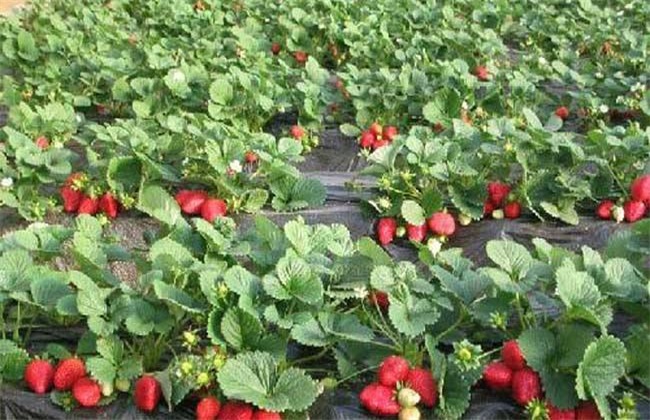
1. Temperature regulation
Based on the solar greenhouse situation, after the greenhouse strawberry cover is put in place, if it is a sunny day, then every day at 10 a.m., if the temperature is above 35°C, ventilation should be carried out in time to lower the greenhouse temperature. Keep the temperature at around 30°C, and maintain the nighttime temperature at around 15°C. It must not fall below 8°C. If the nighttime temperature keeps dropping, straw mats should be covered in time for insulation. When artificially adjusting the greenhouse temperature, methods such as uncovering and covering straw mats during the day, ventilating at noon, and controlling the size of ventilation openings should be used to regulate the temperature.
Generally, about one month after the cover is put in place, the strawberries enter the flower bud stage. After budding, the temperature should be lowered to around 25°C, with the suitable nighttime temperature at around 10°C. The nighttime temperature should not be too high; if it is above 12°C, then the stamens and pistils are hindered, causing axillary flower buds to degenerate. Then the temperature control during the flowering stage is also very important. We must reasonably regulate the temperature according to the strawberry growth stage. The temperature during the flowering stage should be kept at around 24°C, and at around 10°C at night. When the anthers are dehiscing, the minimum temperature must not be below 12°C. 14-20°C is the most suitable; too low a temperature will affect anther dehiscence, leading to hindered pollination and fertilization.
2. Humidity regulation
After the greenhouse strawberry cover is put in place, the humidity inside the greenhouse will gradually increase. Especially in the morning each day, the humidity can reach as high as 100%, and if the greenhouse humidity is too high, the impact on strawberry growth and development is very great. It easily triggers various diseases and pests, among which the evaporation of water from the soil and the strawberries is the main cause of increased humidity. Therefore, when watering, drip irrigation should be the main method, which can appropriately reduce the humidity inside the greenhouse.
So, if we want to reduce the humidity inside the greenhouse, then we should consider every aspect within the greenhouse. For example, when watering, do not use flood irrigation, and the soil should not be too wet. Moreover, when reducing humidity, appropriate ventilation is needed, which will create a certain contradiction with insulation. In the morning, the humidity is relatively high, so both dehumidification and insulation are needed. At noon, it is the best time period for ventilation and dehumidification. At other times, ventilation and dehumidification should be carried out on the premise of insulation.
The above is a brief introduction to how to manage temperature and humidity in greenhouse strawberries. That is all for today's introduction. This article is for reference only, and I hope it can help everyone!