What are the functions and benefits of pruning dragon fruit?
Dragon fruit is a typical tropical fruit, and there is a very large market demand for it in China. The planted area in China is also very large, and when growing dragon fruit, management work is very important. Pruning work in particular: reasonable pruning is the key to ensuring dragon fruit yield. So what is the use of pruning when growing dragon fruit? Below, the editor will give you a brief introduction. Let's take a look together!
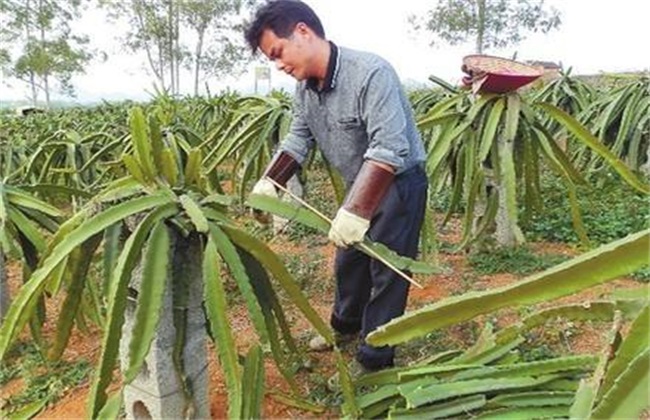
1. Improve air and light penetration
Because dragon fruit is a tropical fruit, it relatively prefers sunlight. Under strong light conditions, dragon fruit's flowering and fruiting are very good. The fruiting rate of the outer branches is high, but dragon fruit grows relatively vigorously, easily sprouts branches and forms a layered canopy, and the mutual shading between branches is relatively serious. This causes the inner branches to receive insufficient light, seriously affecting the growth of dragon fruit. Therefore, reasonable pruning can rationally retain branches and control the canopy shape. It improves the air and light penetration between branches, promotes the formation of large, thick, robust fruiting mother branches in dragon fruit, and increases dragon fruit yield.
2. Interchange between vegetative branches and fruiting branches
The buds on dragon fruit branches are mainly mixed buds, which can sprout a large number of branch buds and flower buds, improve the quality of individual fruits, and promote fruit development. Branches are divided into two types: vegetative branches and fruiting branches. Thick, plump branches of suitable length are fruiting branches. Generally, about 2/3 of the branches on the whole plant are fruiting branches, while the others can serve as vegetative branches. Reserved branches sprouted in the current year can be cultivated into vegetative branches, and in the second year they can also serve as fruiting branches. After the flower buds sprouted on fruiting branches are thinned out, they can be transformed into vegetative branches, and after vegetative branches reserve flower buds, they can be transformed into fruiting branches. The two types of branches can replace each other, which can effectively improve fruiting performance.
3. Regulate the contradiction between vegetative growth and reproductive growth
The fruiting period, fruit load, and fruit size of dragon fruit are the main reasons affecting dragon fruit yield. The development time of an individual dragon fruit is generally not very long, but the reproductive growth time of the tree is relatively long. It is possible to see large and small fruits, red and green fruits, and flower buds and flower buds coexisting on a single fruiting branch. Therefore, there is a relatively serious contradiction in nutrient competition. So, through operations such as flower and fruit thinning and pruning, we can effectively regulate the contradiction between dragon fruit's reproductive growth and vegetative growth. Maintain a moderate tree vigor in dragon fruit so that it forms a sufficient nutritional area.
4. Disease and pest control
In dragon fruit trees that have undergone reasonable pruning, tree vigor is significantly enhanced, and the tree body's ability to resist disease and natural disasters is also improved. This reduces the occurrence of diseases and pests and achieves the effect of disease and pest control. Moreover, when we prune, the main pruning targets are removing diseased branches, weak branches, and so on. This is also one of the main measures for controlling diseases and pests.
The above is a brief introduction to what pruning dragon fruit is for. That is all for today's introduction. This article is for reference only, and I hope it can help everyone!