How Do Citrus Trees Safely Overwinter? A Detailed Guide to Cold-Protection Management
We have now entered late autumn, and the weather is gradually turning cooler. Of course, citrus has also reached its harvest season, which for citrus growers is the season of reaping the rewards of a year of hard work. But it is also a season of worry for growers, because autumn is about to give way to winter, and if winter management is improper, next year's harvest may be affected. Below, follow the editor to learn about the four hazards that citrus overwintering needs to guard against.
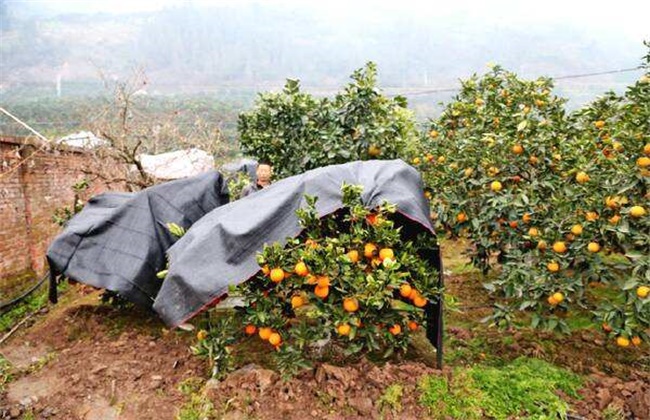
1. Frost damage
The degree and the parts of the citrus tree harmed by frost vary depending on how much the temperature drops and how long the frost lasts. Different citrus varieties, or even different organs of the same fruit tree, have different critical low temperatures at which they are harmed. Under normal circumstances, fruit growers use smoke to prevent frost damage, which can reduce the loss of ground heat, but care must be taken for safety during the operation, and the smoke must not cause other harm to the fruit trees. If conditions permit, heaters can be used, which can also effectively raise the temperature in the orchard and prevent frost.
2. Freeze damage
During the overwintering period, the various growing organs of a fruit tree differ in their resistance to low temperatures. If branches and buds suffer freeze damage, it is very likely to affect the following year's yield, and in severe cases it can cause entire branches to die, greatly affecting fruit tree production. There are also many causes of freeze damage, so comprehensive prevention and control should be adopted during production. For example, when freeze damage occurs, light pruning and late pruning can be used; in the early stage, adequate water should be ensured, fertilizer should be applied at the right time, and nutrition should be maintained so that the tree's vigor recovers as quickly as possible.
3. Wind damage
Strong winds can also cause the tree body to develop a lopsided or eccentric crown. In winter, strong winds can even cause young trees to dry out and die. In spring, dry winds can also scorch the new shoots and tender leaves of fruit trees, shortening the flowering period, reducing the fruit-setting rate, and directly affecting yield. When there are strong winds during the flowering period, artificial pollination can be used to increase the fruit-setting rate. If it is windy during the production season, props should be set up in time for the fruit trees and the fruit tied to prevent lodging and branch breakage. When there is windy weather during the harvest period, the tree basin can be deep-plowed or the tree basin covered with grass to reduce fruit drop.
4. Twig dieback
Twig dieback occurs rather severely on young Orah mandarin trees, often causing the tree shape to become disordered and affecting early fruiting. The way to prevent twig dieback is to apply more fertilizer and water in the early stage of young tree growth, apply more phosphorus and potassium fertilizer in the later stage, and carry out scientific and reasonable pinching to promote strong branch growth and improve the overwintering ability of young trees.
The above is an introduction to precautions for overwintering citrus trees. We hope it can help you. To learn more related knowledge, please stay tuned to us.