How to Choose a Site and Build an Orchard for Orah Mandarins? Key Techniques Explained
Orah mandarin is a late-ripening hybrid citrus variety with the advantages of vigorous growth, few winter fruit drops, strong fruiting capacity, and a long harvest period, and its market season falls right around the Spring Festival, so its cultivation returns are excellent. In China, quite a lot of people grow Orah mandarins, and the first step in planning Orah mandarin cultivation is to do a good job of site selection and orchard planning. Let's take a look at the techniques for choosing a site and building an orchard for Orah mandarins below.
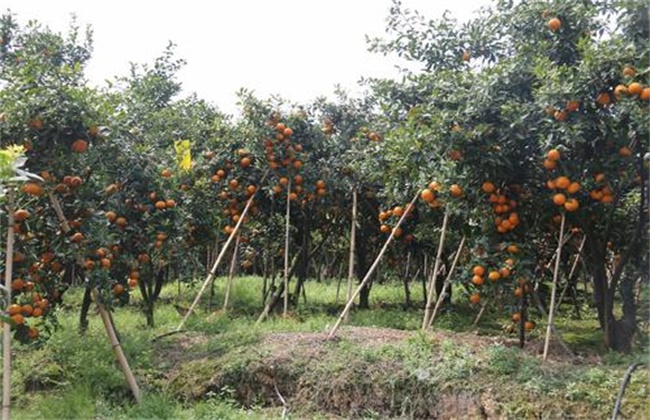
I. Site Selection
Orah mandarins have standard requirements for their growing period: soil, air, water, and climate must all meet the standards. The most suitable soil for Orah mandarin growth requires a deep soil layer, soft and loose land, and a pH value between 5.5-6.5. If it is low-lying land or flat land, the groundwater level is required to be below one meter, which makes drainage and irrigation convenient. In addition, one more thing to note: check whether other citrus is grown nearby and whether it is infected with huanglongbing (citrus greening disease). If there is infection, the selected site must be more than one thousand meters away, otherwise it will very easily become infected with huanglongbing.
II. Orchard Establishment
1. Planning of the Orchard Site
The orchard site should be planned according to the terrain, topography, slope aspect, and area of the orchard in many aspects. Orchards on hills and mountainous land can use every 20-60 mu as one plot, while flatland orchards can use every 100-200 mu as one plot. Mountainous terrain should be built into contour terraces, and in windy areas windbreak forests need to be built. The choice of tree species for the windbreak forest is also very important; fast-growing tree species that do not share diseases and pests with citrus must be selected.
2. Young Trees and New Branches
To choose Orah mandarin seedlings for planting, first buy from a producer that has a production and operation license, a quality certificate, and a phytosanitary certificate, so that quality is guaranteed. When buying, choose virus-free seedlings, disease-free seedlings, and healthy seedlings. Second, the seedlings should have 3-4 main branches, a stem diameter above 0.8 cm, and a seedling height above 50 cm. Finally, also check whether the seedling's root system is well developed and whether mechanical damage is severe. If it is rootstock, it is best to choose fragrant orange (Citrus junos) or trifoliate orange (Poncirus trifoliata).
3. Field Planting
For field planting, it is best to choose spring or autumn. Spring planting is mainly carried out from February to April, planted before the spring shoots of the seedlings bud or after the spring shoots mature and before the summer buds sprout; autumn planting is generally carried out from October to November, planted after the autumn shoots mature. Orchards in mountainous areas need to have contour terraces opened before planting, and planting holes or trenches are set out at standard row spacing; for flatland planting, beds need to be raised first, and planting holes are set out on the bed surface according to the plant spacing. Before planting, apply sufficient base fertilizer, mix it thoroughly with the topsoil, then backfill soil and build a soil mound 0.2-0.3 m above the ground. When planting, ensure the seedling stands upright in the center of the hole, the root group is evenly distributed and spread out, and the filling soil is compacted so that the root system closely connects with the soil. After planting, water thoroughly with settling water, and cover the tree disk with weeds and the like to retain moisture, so as to help survival.
4. Management After Planting
If there is no rain after planting, water in time to keep the soil moist, so as to help the plant take root. If leaf curling occurs after planting, prune in time, and if dead seedlings are found, replant in time. After the new shoots turn green, apply one dilute fertilizer solution, and afterward apply fertilizer 2-3 times with each flush of shoots, and promptly remove buds and control diseases and pests.
The above is an introduction to how to choose a site and build an orchard for Orah mandarins. We hope it can help you. To learn more related knowledge, please stay tuned to us.