How to manage jujube trees after harvest? These key points you need to master
The management of jujube trees after harvest is often neglected by fruit growers. During this period, although the vegetative growth of the jujube tree has stopped, the photosynthesis of the leaves still continues, and the photosynthetic products are continuously transported to the roots, branches, trunk and other organs for storage, accumulating nutrients for the tree body and enhancing its cold resistance. Therefore, the management of jujube trees after harvest is extremely important in the whole year's management. Doing a good job of cultivation and management during this period lays a solid foundation for high yield and high quality in the coming year. Let's take a look below.
1. Soil improvement and fertilization
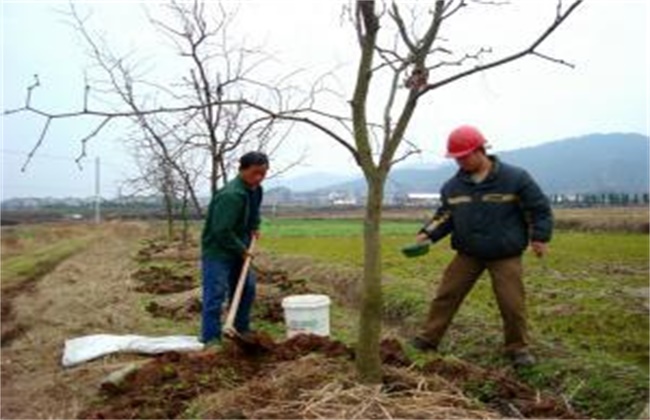
After picking, the soil should be deeply plowed. This can not only improve the soil's physical and chemical structure, promote the expansion and deep penetration of tree roots, and enhance vigorous tree growth, but also plow the residual branches, diseased leaves, fallen fruit and weeds in the orchard into the soil as fertilizer. Generally, deep plowing for soil improvement is carried out together with autumn application of base fertilizer, and the plowing depth is preferably 20~25cm. The base fertilizer should mainly be farmyard manure and fermented fertilizer, with an appropriate supplement of phosphate fertilizer according to the soil fertility. Fertilization can be done by plowing and broadcasting, circular trench application or radial trench application.
2. Winter and autumn orchard cleaning
Pests and diseases mainly overwinter in the diseased and pest-infested branches and rough bark cracks of jujube trees, so these diseased and dead branches should be pruned off in time. At the same time, scrape off the old peeling bark and clean up the fallen berries, rotten fruit and weeds on the ground, and burn or bury them deeply in a centralized manner. After cleaning, spray lime sulfur mixture over the whole orchard, and also spray fungicides such as carbendazim on the ground under the trees. Through insecticidal and fungicidal treatment, further reduce the pest and disease base. Because the plants have already shed their leaves during this period, pesticide use is unlikely to cause phytotoxicity, so the concentration can be appropriately increased to achieve better results.
3. Whitewashing the trunk or tying grass
After the plants shed their leaves, whitewash the trunk and the base of large branches or tie grass around them. While providing cold protection, this can also control pests such as the globose scale that overwinter on the trunk. After the beginning of spring the following year, remove the grass and burn it clean. In this way, a large number of overwintering pests and eggs parasitic in the grass bundles can be eliminated.
4. Shaping and pruning
Through shaping and pruning, cultivate and adjust the tree structure, lay it out reasonably, and improve light conditions. For dense branch groups as well as crossing branches and overlapping branches, all should be thinned out to maintain ventilation and light penetration within the crown. For aging branch groups and water sprouts, heavy cutting or heading back can be adopted to promote the sprouting of new branches and improve the quality of flower bud differentiation each year.
The above is an introduction to the key points for managing jujube trees after harvest. We hope it can help you. If you want to learn more related knowledge, please stay tuned to us.