How to manage pomegranates during the ripening period? Master these key points
It is currently the season when pomegranates ripen and go on the market. During this period, pomegranates grow relatively quickly, and many fruit growers tend to slack off on pomegranate management, but management should be given even more attention at this time. So how should pomegranates be managed during the ripening period? Follow the editor to learn about it.
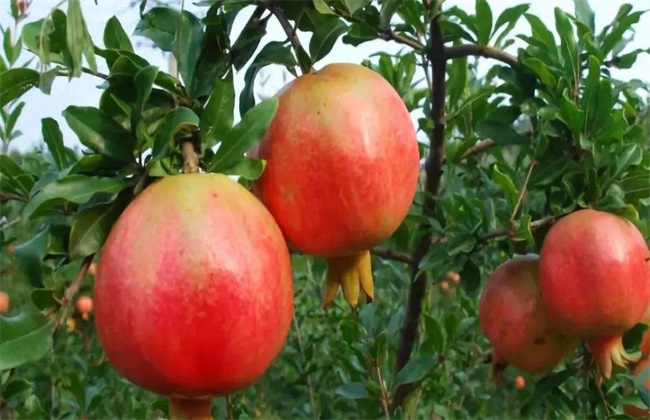
1. Fertilizer and water management
When pomegranates are approaching the ripening period, their growth rate is relatively fast, and at this time they need sufficient nutrients to keep the tree strong so it can resist the occurrence of pests and diseases. Therefore, in terms of fertilization, foliar fertilizer should be the main type, and for soil fertilizer, phosphorus and potassium fertilizers should be the main type. Do not apply large amounts of nitrogen fertilizer, so as to avoid poor coloring and reduced quality during the fruit ripening period. Irrigate after fertilizing to replenish water, so as to avoid aggravating dried fruit or fruit drop.
2. Preventing fruit cracking
The pomegranate ripening period is also the period when fruit cracking occurs. Once pomegranates crack, it can easily not only affect quality, but pathogens can also invade through the cracked areas, causing the fruit to rot, resulting in a sharp decline in yield, and in severe cases it can even affect the whole plant. Therefore, 10-15 days before harvest, watering must be strictly controlled. This is especially true for dry mountain and hilly orchards and orchards in plain areas with irregular irrigation. After a long drought followed by rain, harvest should be carried out promptly.
3. Controlling the occurrence of pests and diseases
At this time, the main pests and diseases to control on pomegranates are rough skin disease and peach fruit borer. Diseases occurring on pomegranate fruit peel can all be collectively called “rough skin disease”. It is a comprehensive disease, and 25% Shike emulsifiable concentrate can have a very good effect. For the control of peach fruit borer, 25% diflubenzuron No. 3 2000 times + 600 times agricultural antibiotic 120 + Youguo calcium 800 times + new high lipid film can be used, but note that while applying the pesticide, remember to remove diseased and pest-infested fruits.
4. Management after fruit harvest
After the fruit is harvested, autumn fertilizer should be applied heavily. The base fertilizer should be mainly organic fertilizer, such as barnyard manure, compost, green manure, crop straw, etc. Adding an appropriate amount of quick-acting nitrogen fertilizer and phosphorus fertilizer will make the effect better. Base fertilizer can strengthen tree vigor and increase stored nutrients. After harvest, the orchard should be cleaned promptly. Residual fruits, fallen fruits, and diseased and pest-infested fruits should be taken out of the orchard for centralized treatment. Pomegranate plants should be promptly shaped and pruned, especially root suckers and water sprouts, excessively dense branches, thin and weak branches, diseased and pest-infested branches, drooping branches, crossing branches, overlapping branches, etc. If the pruning wounds are relatively large, promptly apply a medicinal agent that promotes healing to prevent infection by pathogens.
The above is an introduction to the key management points for the pomegranate ripening period. I hope it can help you. If you want to learn more related knowledge, please follow us.