What causes the low fruit set rate in plums?
For farmers who grow plums, the most important thing for increasing economic returns is to find a way to raise the fruit set rate, but many farmers have an extremely low fruit set rate in their own plum orchards. What causes this? Let's take a look together.
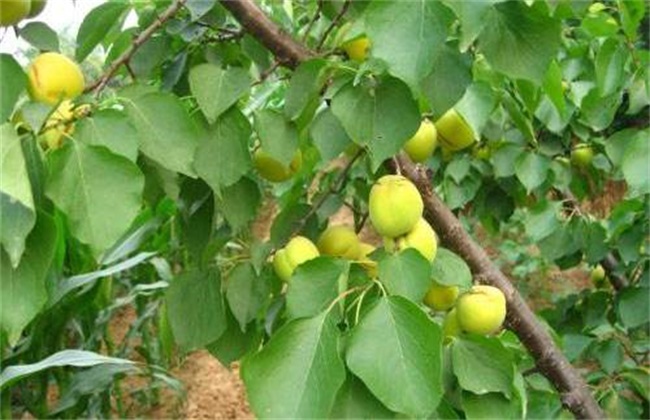
1. Improper choice of variety
The growing environment of plants cultivated in a greenhouse is clearly different from that outdoors, which means varieties that perform well when grown in the open field are not necessarily suitable for greenhouse cultivation. However, some farmers directly cover open-field varieties with a greenhouse and switch them to greenhouse cultivation in order to achieve early ripening and an earlier market launch. This is actually a wrong approach. Some open-field varieties, because of their high chilling requirement for overwintering, poor self-pollination ability and vigorous vegetative growth, show poor or excessive vegetative growth when grown in a greenhouse, resulting in many flowers but few fruits. For this problem, you should choose suitable varieties according to your own cultivation model.
2. Climatic reasons
Because spring temperatures are extremely unstable, rising and falling unpredictably, and late spring cold spells are also very likely to occur, such a climatic environment greatly affects flowering and pollination of pear trees and may very likely lead to pollination failure. There is no way to change climatic conditions by human effort, but this can be solved through greenhouse cultivation, and at this point attention must again be paid to variety selection.
3. Too few pollen-providing trees
Many people forget to increase the diversity of plum varieties when planting plums, so when the pollination season arrives, the plants do not have enough pollen to complete pollination. In this case, even if the fruit trees produce a large number of flowers, without fruit trees providing pollen for them, their fruit set rate will not increase. Therefore, during cultivation, pollinizer trees must be planted in a reasonable proportion so that pollination can proceed normally and the fruit set rate can be increased.
4. Unreasonable pruning
Pruning plums is done to increase the ventilation and light penetration of the fruit trees and raise the fruit set rate, but if pruning is excessive and the number of branches is too small, there will naturally be fewer fruiting branches, which directly affects yield. However, if too many branches are retained, nutrients are too dispersed, ventilation and light penetration are poor, small branches in the inner canopy tend to die, the fruiting position shifts outward, and yield also decreases. Therefore, reasonable pruning and maintaining an appropriate number of retained branches are important guarantees for high, stable and high-quality yields.
The above is an introduction to the reasons for the low fruit set rate in plums. We hope it helps you. To learn more related knowledge, please stay tuned to us.