What causes strawberries not to bear fruit
Strawberries are in high demand in the market and offer good economic returns, so quite a lot of people grow them. However, some growers encounter the problem of plants not bearing fruit during cultivation, which really worries fruit farmers. So why do strawberries fail to bear fruit? Let's take a look.
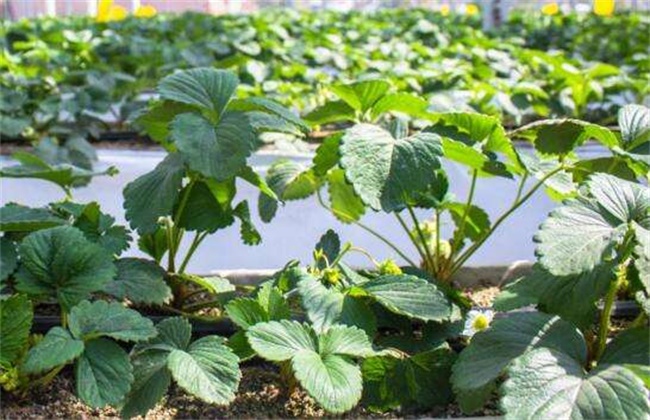
I. Internal factors
1. Variety characteristics
Varieties with different ripening periods differ in how early or late flower buds differentiate, the number of flowers differentiated, and the number of flower buds, so choosing the right strawberry variety is very important, and the quality of flowering also determines the quality of fruiting in strawberries.
2. Nutrients
The nutritional status of the plant is closely related to flower bud formation. Before flower bud differentiation, an adequate supply of carbohydrates and a higher ratio of nitrogen is favorable for flower bud differentiation; otherwise, flower bud differentiation is delayed. Strong seedlings differentiate flower buds earlier than weak seedlings, and their number of florets also increases accordingly. Too much nitrogen leads to vigorous vegetative growth, which is unfavorable for flower bud differentiation.
3. Growth-regulating substances
Flower bud differentiation in strawberries is the result of the interaction between hormones that promote flower bud differentiation and hormones that inhibit it. Generally, hormones that promote growth, such as gibberellins and auxins, are unfavorable for flower bud differentiation; conversely, hormones that inhibit growth, such as abscisic acid and cytokinins, promote flower bud differentiation.
II. External factors
1. Light and temperature
Temperature and light affect physiological processes in strawberries such as photosynthesis and respiration; they are related to the plant's nutrient production and affect flower bud differentiation. Low temperature and short-day conditions induce flower bud formation, and most strawberry varieties begin flower bud differentiation under the induction of low temperature and short-day conditions.
2. Watering and fertilizing
With the same variety, because too much nitrogen fertilizer is applied and there is more watering or rainfall, the plant's vegetative growth is strong, and either excessive vegetative growth, too many leaves, or insufficient leaves will delay flower bud differentiation. Therefore, try not to irrigate heavily or apply too much nitrogen fertilizer, so as to avoid the plant remaining green and ripening late with little nutrient accumulation, which would affect the quality of flower bud differentiation.
3. Spraying plant growth regulators
Artificial spraying of gibberellin can inhibit flower bud differentiation, while plant growth retardants and inhibitors such as chlormequat, paclobutrazol, and abscisic acid, when applied to strawberry seedlings, inhibit plant growth and promote flower bud differentiation.
4. Leaf removal
Leaf removal can induce flower formation, and removing old leaves is more effective than removing new leaves, because old leaves contain more flower-inhibiting substances; removing them reduces their content and at the same time reduces nutrient consumption and increases accumulation, thereby promoting flower bud differentiation. Therefore, in production, leaf removal should be kept moderate to avoid causing failure to bear fruit.
The above is an introduction to what causes strawberries not to bear fruit. We hope it helps you. To learn more related knowledge, please stay tuned to us.