Detailed Explanation of Key Field Management Techniques for Honeydew Melon
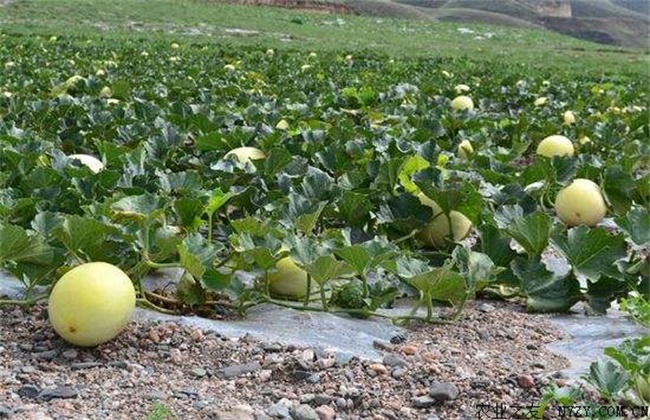
Honeydew melon, also known as Lanzhou honey melon, formerly called Wallace, originated in the United States. It has thick skin, sweet flesh, abundant juice and tender texture, and also has the effects of clearing summer heat, relieving thirst and promoting urination, and stimulating appetite and strengthening the spleen. In China, it is mainly grown in Lanzhou, so how should honeydew melon be managed when grown? Follow the editor to learn about it.
1. Seedling Stage Management
Generally, seedlings begin to emerge 10 days after sowing, and full emergence occurs in about 2 weeks. As the seedlings grow, the temperature also rises, so at this time ventilation, air exchange, and light should be managed well for the greenhouse. During the day, gradually open both sides of the greenhouse for ventilation and air exchange, and at night press them tightly to provide insulation. At the same time, ventilation for the small row shelters should be increased gradually. Generally, the temperature inside the row shelters should be controlled between 30-32 degrees only. When the seedlings grow to 5 true leaves, the small row shelters can be gradually removed according to weather conditions.
2. Assisted Pollination
To increase the yield of honeydew melon, assisted pollination is indispensable. During the flowering period, manual assisted pollination should be used to ensure normal fruit setting. Pollination is generally carried out in the morning, as the success rate of pollination is higher at this time.
3. Ventilation and Air Exchange
The time and intensity of ventilation should be determined according to the different growth stages of honeydew melon and the weather of the day. The seedling stage occurs in early spring, when the outside climate is changeable, so ventilation should be relatively small at this time, generally only 3-4 hours at noon. As the seedlings grow, the outside temperature gradually rises, so ventilation can be increased and the ventilation time extended. Generally, the temperature inside the greenhouse should be controlled between 30-35 degrees during the day, and must not be lower than 15 degrees at night. After fruit setting, in order to promote fruit expansion and sugar accumulation, ventilation should be increased even more during the day, and the greenhouse films at both ends of the greenhouse can be opened and closed at night. If there are continuous cloudy days, attention should be paid to extending the ventilation time to reduce the humidity inside the greenhouse.
4. Pest and Disease Control
The main pests and diseases of honeydew melon include damping-off, gummy stem blight, powdery mildew, phytophthora blight, leaf spot, viral disease, and aphids, and targeted control should be carried out. For damping-off control, the main goal is to cultivate strong seedlings, and crop rotation should be practiced to improve plant resistance. Dexon solution can also be used to spray the roots for control. For gummy stem blight, diseased plants should be removed promptly after discovery, and the greenhouse should be treated with mancozeb solution. For powdery mildew, spray once with carbendazim or thiophanate-methyl solution when the disease occurs. For aphids, Jing smoke agent can be used for control, or 1000-fold dimethoate solution can be sprayed.
The above is an introduction to the field management techniques for honeydew melon. We hope it can help you. If you want to learn more related knowledge, please stay tuned to us.