What planting environment suits aronia? Detailed explanation of its growth condition requirements
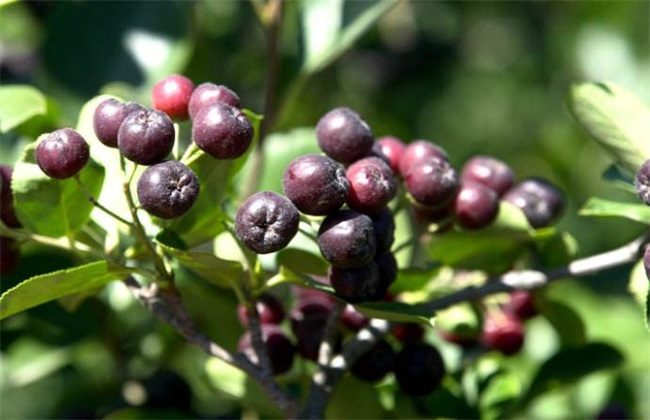
Aronia is a deciduous shrub, originally native to the wet woodlands and swampy areas of North America. It is commonly used as an ornamental plant. It is a delicious fruit. It can also be made into jam. So what kind of environment does this fruit need to be planted in to grow well? What kind of environment does artificial cultivation need to provide? Let's take a look.
1. Place of origin
Native to the eastern region of North America, it was later introduced to Europe, and also to the former Soviet Union. It was introduced to our country in the 1990s. It is mainly planted in the western Liaoning region. Now many provinces grow it. But when aronia arrived in Asia, its growth characteristics showed a few changes due to environmental influence. Its ability to adapt to the environment is relatively strong. So many regions can cultivate it.
1. Soil
It likes to grow in acidic soil, or slightly alkaline soil. It likes climate and environmental conditions with relatively more precipitation. Generally, as long as the annual rainfall reaches 500 mm, the extreme low temperature must be greater than minus 40 degrees. Generally, actually even minus 30 degrees is a bit severe. The soil's acidity and alkalinity requirements are not strict, with a very wide range, from 5.0 to 8.0. Actually, ordinary soil is suitable for cultivation.
3. Temperature
After planting, the fruit generally matures in August. The fruit is very cold-resistant and can grow at minus 20 degrees, so it can also be planted in northern places. But the most suitable temperature for plant growth is between 18 and 22 degrees. However, the fruiting period may need the temperature to increase a little, because the leaves need sufficient photosynthesis to produce more nutrients for fruiting.
4. Water
For growth, its demand for water is not as much as that of other fruit trees. Because the fruit is relatively small and relatively drought-tolerant, not having too much water is better for the tree's growth. It must not have water accumulation; water accumulation easily leads to growth diseases. So you can water several times in small amounts, and do not let it become too dry. If the leaves show some dryness in color, you can water appropriately.
Generally, aronia has a wide planting range and relatively strong adaptability, so the planting environment is also relatively flexible, and the conditions are not that harsh.