Key Management Techniques for Greenhouse Grapes After Harvest
Grapes are perennial fruit trees, and bearing fruit consumes a large amount of nutrients, so generally after harvest, tree recovery management is carried out promptly. Cleaning the orchard and preventing pests and diseases are also necessary tasks. However, greenhouse-grown grapes have fewer diseases, less dead wood and fallen leaves, and fertilizer application is restricted, so let's take a look at how to manage them.
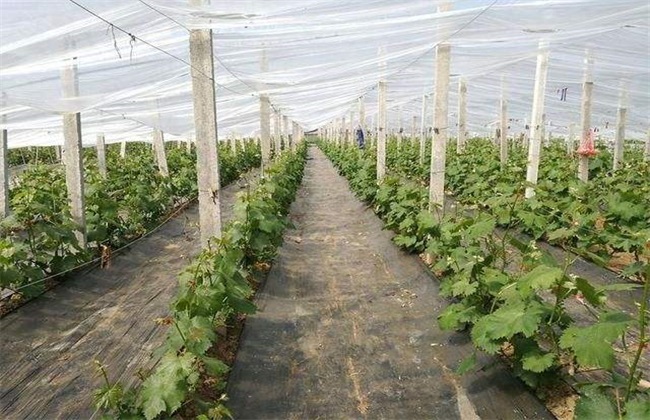
1. Pruning
After harvest, the main task is pruning: cut the trunk back to 50 cm above the ground to promote the sprouting of latent buds and cultivate new main vines to serve as the fruiting canes for the next year; this is essentially renewing the fruiting canes and restoring new vitality. Complete this promptly after harvest. For long-shoot pruning, cut the main vine that has already borne fruit back to the bend of the trellis to promote sprouting and cultivate fruiting canes.
2. Managing New Shoots
After a round of pruning and cutting back, a large number of new shoots are stimulated, and at this point you need to start managing the new shoots. Keep the strong new shoots at suitable node positions and remove the rest; excess branches also consume nutrients. On the main vine, keep shoots evenly spaced and cultivate them into fruiting canes. When they reach sufficient length, pinch the tips so the new shoots can grow. Pinch the tips when the new shoots reach nearly two meters.
3. Restoring Tree Vigor
After renewal is complete, fertilization is needed; it is best to fertilize tree by tree, applying 50 g of urea and 150 g of compound fertilizer per tree. Since the amount of fertilizer is small, it should be applied per plant for better absorption. However, when applying base fertilizer in autumn, 10,000 jin of farmyard manure is needed per mu. It can be applied in furrows, because the fertilizer amount is too large and furrow application allows even distribution.
4. Cleaning and Control
The earlier pruning was for renewal and rejuvenation, but a comprehensive cleanup was not done. We need to remove some dead branches, overly dense branches, and some diseased, withered yellow leaves and branches. Then begin comprehensive sterilization and disinfection. Spray carbendazim all over; the ground and roots must not be missed. It can be sprayed during soil turning and fertilization. Agents such as thiophanate-methyl, mancozeb, and chlorothalonil can also be chosen.
Management of greenhouse-grown grapes after harvest is somewhat different; the interval for applying base fertilizer is longer, and only a small amount of topdressing is used. Renewal is mainly achieved through pruning.