What to Do About Seedling Death After Strawberry Transplanting? A Detailed Guide to Prevention and Control Methods
Strawberries are generally grown by raising seedlings and then transplanting them, rarely by direct sowing. The seeds are too small and not suitable for direct sowing, and direct sowing produces uneven emergence. Supplementing seedlings cannot keep up with the growth period. Seedling death often occurs during transplanting, and can even be severe. So what are the causes, and how should you transplant to avoid seedling death? What should you pay attention to? Let's take a look together at the causes of seedling death and the solutions.
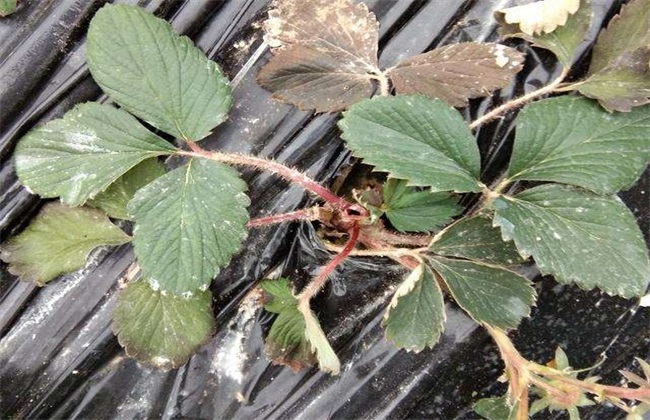
1. Seedlings carrying pathogens
It is possible that during seedling raising they were already infected with fungi or bacteria, but had not yet shown symptoms, and then developed the disease at transplanting when growth had not yet recovered. During the seedling stage, warmth and moisture must be maintained, and some pathogens easily cause infection, such as anthracnose, which develops from the inside outward. You can use 25% Amistar for treatment. Or pyraclostrobin; a variety of chemicals can be chosen.
2. Soil carrying pathogens
If the soil has been continuously cropped for many years, or continuously cropped with the same type of crop, the same disease-susceptible crop. The soil itself contains various pathogens, some of which can directly invade through the root system, and some can infect through wounds. Generally, sun the soil before planting, and sun it again after turning the soil. Spray carbendazim and you can transplant after three days, which can reduce the possibility of infection. Continuous cropping of strawberries will inevitably lead to degeneration, so crop rotation is necessary.
3. Planting depth
Whether planted deep or shallow, the heart leaves must not be buried. When planting, face the flowering position outward, which is good for harvesting. When planting, the soil should best reach the stem base, the root crown area; do not let the roots be exposed, cover the root system completely, because uncovered roots will dry out and die. Also do not bury too deep, as the stem easily rots. If the heart leaves are buried, it is planted too deep and will certainly go bad. The seedlings will easily die.
4. Management and care
For base fertilizer, use organic compound fertilizer, which must be piled up and fully fermented and decomposed, using high temperature to kill insect eggs and pathogens before use. Do not use poultry manure; the temperature is too high, it burns the seedlings, and they easily die. Transplanting should be done when the temperature has dropped somewhat. In some places August is still hot, so it is best to transplant when the actual temperature is around 25°C. Otherwise, with high temperatures and no shade, they easily die. Water once after transplanting, then spray water morning and evening; once the seedlings have successfully recovered, you can water more.
Strawberry seedling death after transplanting is not only due to incorrect planting methods; in fact, management during the seedling stage is also very important. The early disinfection work and the later care work must be done properly.