What are the reasons pomegranates only bloom but do not bear fruit
The pomegranate is a very popular fruit in our daily lives. It has a large market demand, and the area now planted with pomegranates is also very large. When growing pomegranates, many problems often arise that affect their growth, greatly reducing both yield and quality. Pomegranates only blooming but not bearing fruit is one of them. So what causes pomegranates to only bloom but not bear fruit? Let's take a look below!
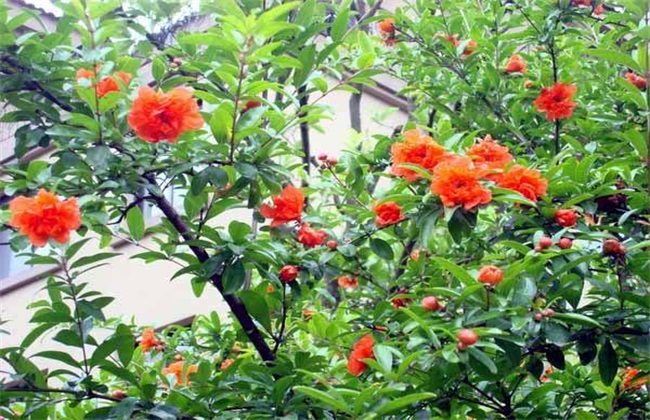
1. Insufficient pollinizer trees
When planting pomegranate trees, we must pay attention to providing an appropriate number of pollinizer trees around them. If there are no corresponding pollinizer trees around the pomegranate trees, then pomegranates only blooming but not bearing fruit will be an inevitable phenomenon. Therefore, when planting, we should plant according to a ratio of 5:8 between the main cultivar and the pollinizer cultivars. If there is no space to plant pollinizer trees, then top grafting should also be carried out on the pomegranate trees of the main cultivar. The top-grafted cultivars should mainly be pollinizer cultivars, and artificial pollination should also be done well to increase the flowering and fruiting rate of the pomegranate trees.
2. Late frost and wind damage
During the growth of pomegranate trees, if they encounter late frost, strong wind damage, or phytotoxicity, it can cause flower and fruit drop in pomegranate trees, and sometimes they may only bloom but not bear fruit. To prevent these phenomena, we should make the corresponding preparations. For example, to reduce the harm of late frost, appropriately delay the time for removing the cold-protection materials from the tree body, and use methods such as covering the tree disk and irrigation to lower the temperature of the pomegranate tree and the soil temperature. Delay the flowering period to a time when there is no danger of late frost, thereby postponing the flowering period of the pomegranate trees.
3. Malnutrition
The nutritional demands of pomegranate trees are actually quite high. During the growth period of pomegranate trees, if sufficient nutrients are not provided for the pomegranate, resulting in insufficient tree nutrition, then it will affect the flowering development of the pomegranate trees and hinder pollination and fertilization. Therefore, we must pay attention to fertilization work, and apply a topdressing of nitrogen fertilizer about ten days before flowering. The element boron is very important for the growth of pomegranates, so an appropriate amount of borax and urea should be applied during the flowering period to promote the germination of pomegranate pollen grains and increase the fruit-setting rate.
4. Excessive vegetative growth of the fruit tree
There are many varieties of pomegranate. Sometimes when pomegranates only bloom but do not bear fruit, it is very likely due to the variety. After the nutrients used by the pomegranate for fruiting are taken away by new shoots, the young fruit will gradually drop due to a lack of sufficient nutrients. Therefore, for some trees with excessively vigorous growth, we use pruning methods such as pinching and girdling to control the tree's growth and concentrate nutrients on the fruit. If the tree body is too weak, then all flowers and fruits should be removed in time to carry out recuperation work for the tree body.
The above is a brief introduction to what causes pomegranates to only bloom but not bear fruit. That is all for today's introduction. This article is for reference only, and we hope it can be helpful to everyone.