A Detailed Guide to Blackberry Planting Techniques and Management Methods
Blackberry, also called dewberry, originated in North America and is a hugely popular fruit. After years of cultivation in the Jiangsu region of China, it was successfully introduced and grown, but blackberries do not keep well and spoil easily, so they are hard to find on the market. So how should this fruit be cultivated, what environment does it need, how is it managed, and what should be noted? Let's take a look together right away!
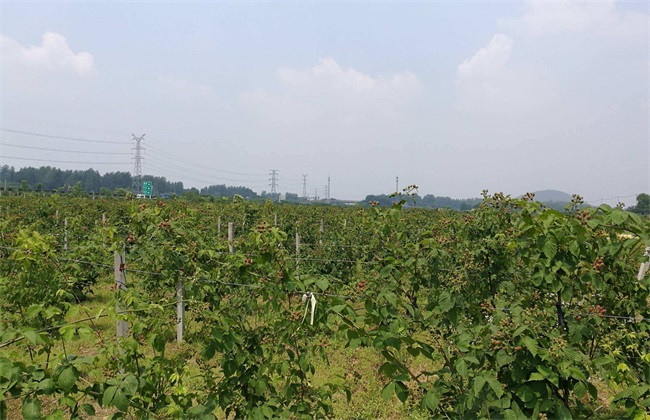
1. Environmental Conditions
The environmental requirements are quite high: well-drained, deep soil rich in natural organic matter; you can also mix your own nutrient soil. But it is best to disinfect the soil first. Plant in slightly higher ground, not in low-lying areas. It needs trellising for cultivation and cannot do without something to climb on. In the rainy south, it must be grown under rain shelter to reduce disease.
2. Planting Methods
New plants can be planted each spring. Dig the planting holes according to the length and spread width of the seedling's root system. Apply organic fertilizer, cover with 8 cm of the excavated soil, then plant; the roots must not come into direct contact with the fertilizer. Protect the root system. The row spacing is 1 m, and the plant spacing is also about 1 m. After planting, water thoroughly to help the roots take hold and absorb nutrients. Leave enough growing space.
3. Growth Management
Mainly apply potassium fertilizer. Fertilize before flowering and during the fruiting period; at these times the fertilizer is dissolved in water and poured on slowly. In summer especially, you can add more water to lower the concentration and reduce the burden on the roots. Before flowering, apply 500 jin of compound fertilizer per mu; during the fruiting period, apply fertilizer in batches, 200 jin at a time, split into early, middle and late stages, because the fruiting times are not uniform. After harvesting the fruit in winter, fertilize once, using 1,000 jin per mu.
4. Plant Training
After trellising is set up for planting, some canes will grow onto the trellis on their own, but some will not, so when the canes reach about 1 m we pinch off the growing tips to stop the main stem from growing and encourage side branches, then tie the main stem to the concrete post. Side branches that sprout later must be pruned, roughly three times a year; prune when the side branches grow excessively or when there are too many of them, crowded and crisscrossing.
There is nothing particularly special about growing blackberries; just be careful that fertilizer does not injure the roots, but the environmental requirements are high, and fertilizing at the key periods is enough. However, pruning is needed to maintain a suitable tree shape.